
The music history of Koriyama, Fukushima. Why Is it called ‘‘The City of Music’’? ~Showa era~ Vol.1
The music history of Koriyama, Fukushima
Why Is it called ‘‘The City of Music’’? ~Showa era~ Vol.1
“Gakuto-kun” is the mascot of Koriyama, Fukushima, a city where music thrives in every school. Students consistently win awards in chorus and ensemble competitions and frequently take part in national contests.
In 2008, Koriyama was officially declared a “City of Music”, marking the city’s flourishing musical culture.
Japan’s first music festival was held here in Koriyama in the 1970s, inspired by the Woodstock festival in the US. But how has this event continued to capture people’s attention even today?
Let’s explore how Koriyama—once called “Rough like Chicago”—transformed into “Beautiful like Vienna”, and how music has become a familiar and cherished part of the local community.
Guide: Singer/Songwriter MANAMI

Let’s dive into the musical history of Koriyama!
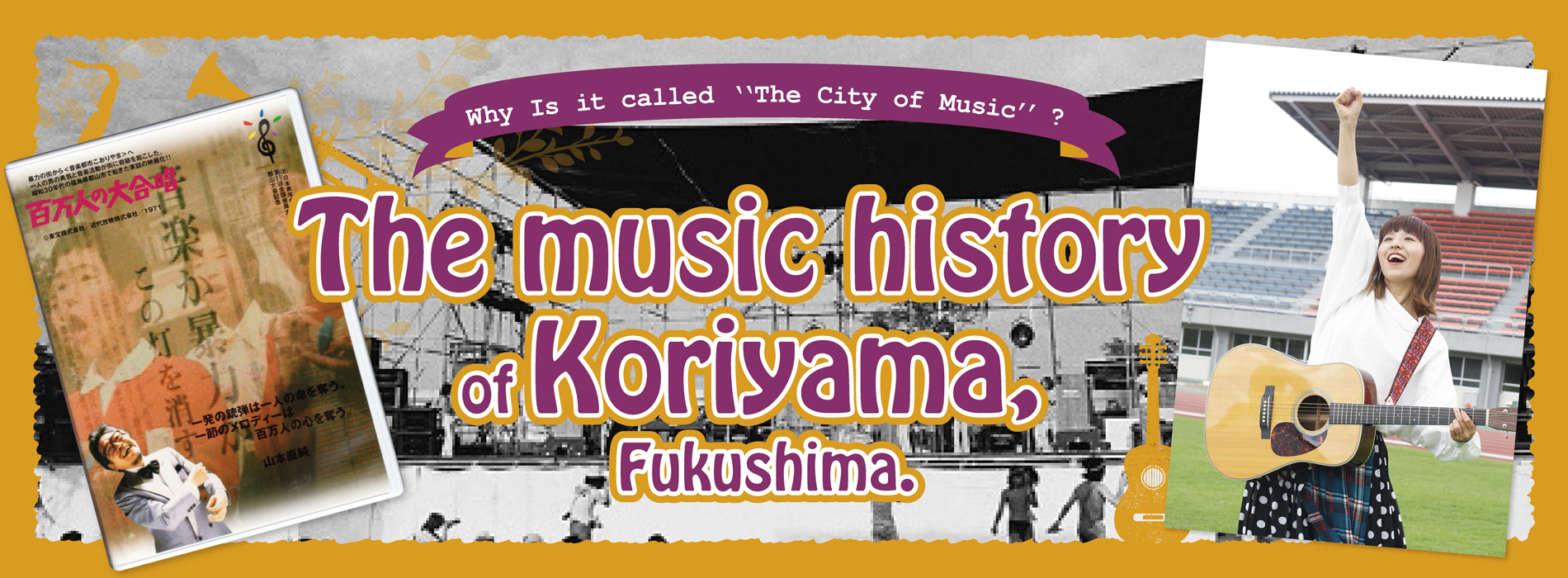
This scene was shot at Kaiseizan Athletic Stadium, the venue for the One Step Festival.
Timeline
Koriyama Music History Timeline
-
1949 (Showa 24)
The Koriyama Music Association was established. Women’s and men’s choirs were formed, and musical activities became lively and active in the community. -
1954 (Showa 29)
The NHK Symphony Orchestra in Koriyama performed at the dining hall of the Japanese National Railways Koriyama Factory. -
1958 (Showa 33)
The Civic Centre was built, providing a hub for cultural and musical events. -
1969 (Showa 44)
The Woodstock Festival was held in the US from August 15–17, inspiring music enthusiasts worldwide. -
1972 (Showa 47)
The film “The One Million Voices” (Hyakuman-nin no Dai Gassho) based on Koriyama was released. -
1974 (Showa 49)
On the 50th anniversary of municipal organization, Japan’s first rock festival, the One Step Festival, was held in Koriyama.
“Rough like Chicago”
From the Meiji era to the prewar period, Koriyama developed rapidly as an industrial city. The influx of people from other regions led to frequent disputes and group conflicts, earning Koriyama the nickname “Rough like Chicago”—considered an unsafe city in the Tohoku region.
At the same time, people began turning to music as a way to lift their spirits and bring some joy to daily life.
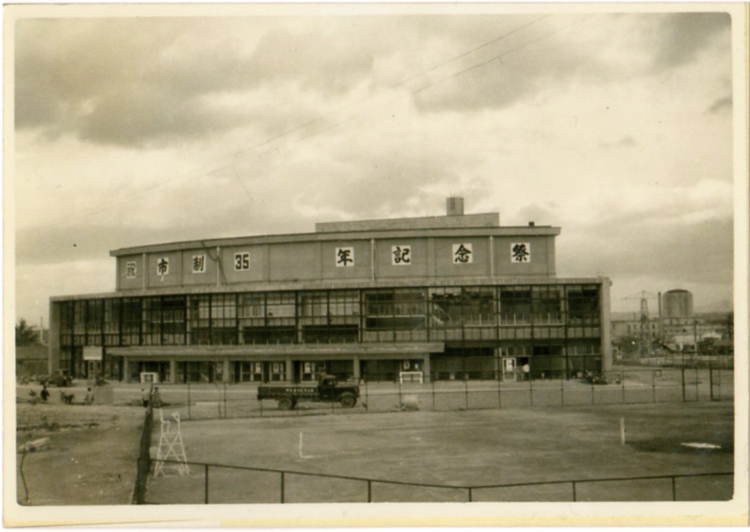
①Newly built Civic Hall
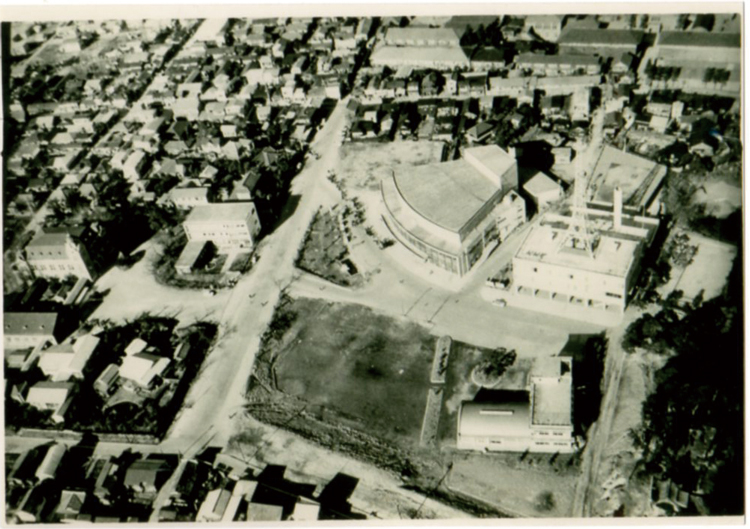
②‘Community centre’ and ’Library’ were built (1958)
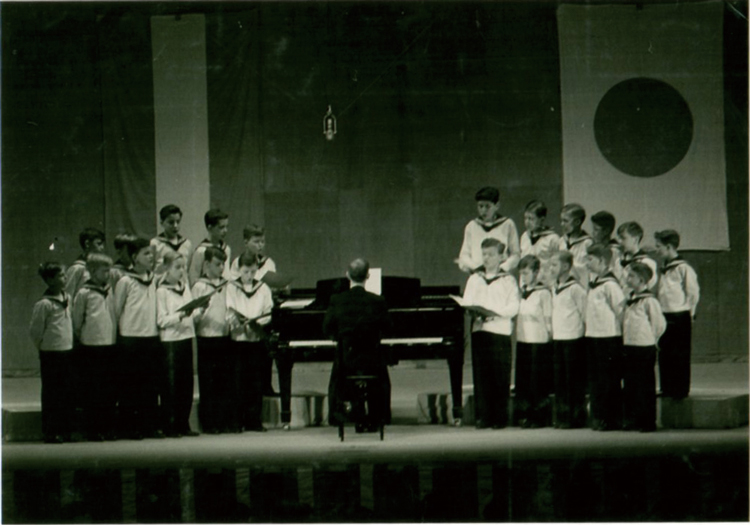
③Vienna Boys Choir at Municipal Hall (March 3, 1959)
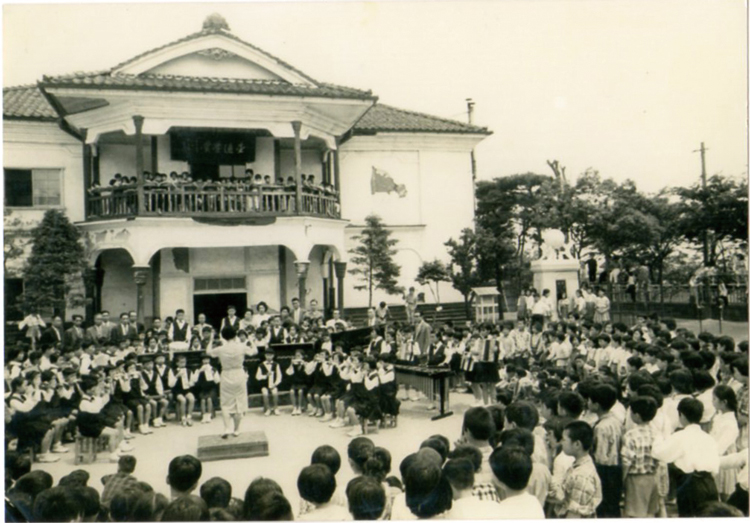
④Kinto elementary school performing (They were chosen as the best school in the national contest in 1962 and 1963. In front of the memorial hall.)
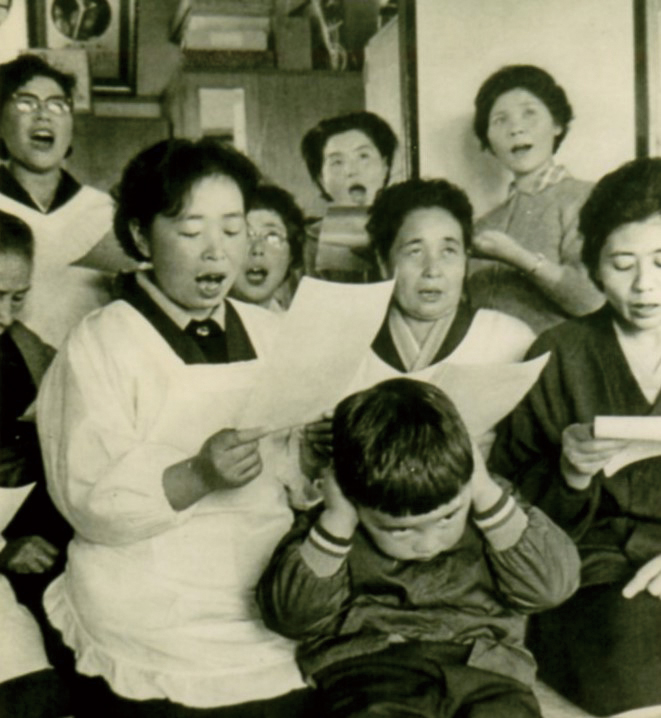
⑤‘200,000 people’s chorus’ movement started.(1964)
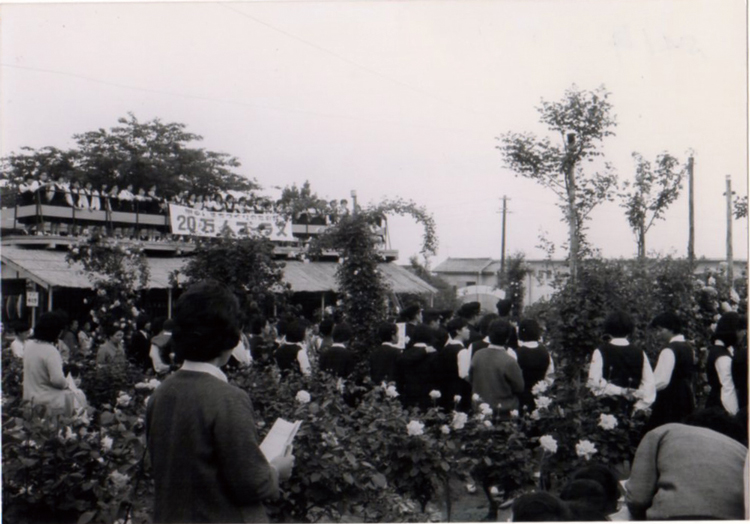
⑥From ‘200,000 people’s chorus’
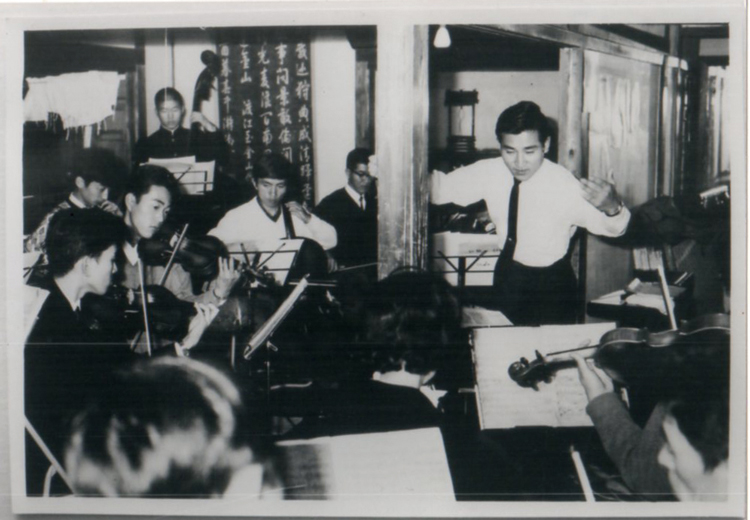
⑦The Koriyama Symphony Orchestra practising.
※①~⑦ Photos are provided by Koriyama City Historical Museum
What is the movie ‘The one million voices (Japanese title: Hyakuman nin no dai gasshou)’?
A Japanese movie based on a true story set in Koriyama City, Fukushima in the 1950s depicts the city during a turbulent time. Back then, Koriyama was nicknamed “Rough like Chicago” due to frequent conflicts between gangster groups. Despite this, some residents were working to transform the city into a city of music, and many citizens even participated as extras in the film.
The movie also serves as a valuable documentary, preserving images of old buildings, 1970s fashion, and the Koriyama dialect, which no longer exists. Filming locations included Asaka High School, the arcade in front of the station, Nakamachi, Sakura-dori, and the autumn festival at Asaka Kunitsuko Shrine.
“A single bullet takes one person’s life. A single line of melody takes millions of people’s hearts.” Naozumi Yamamoto
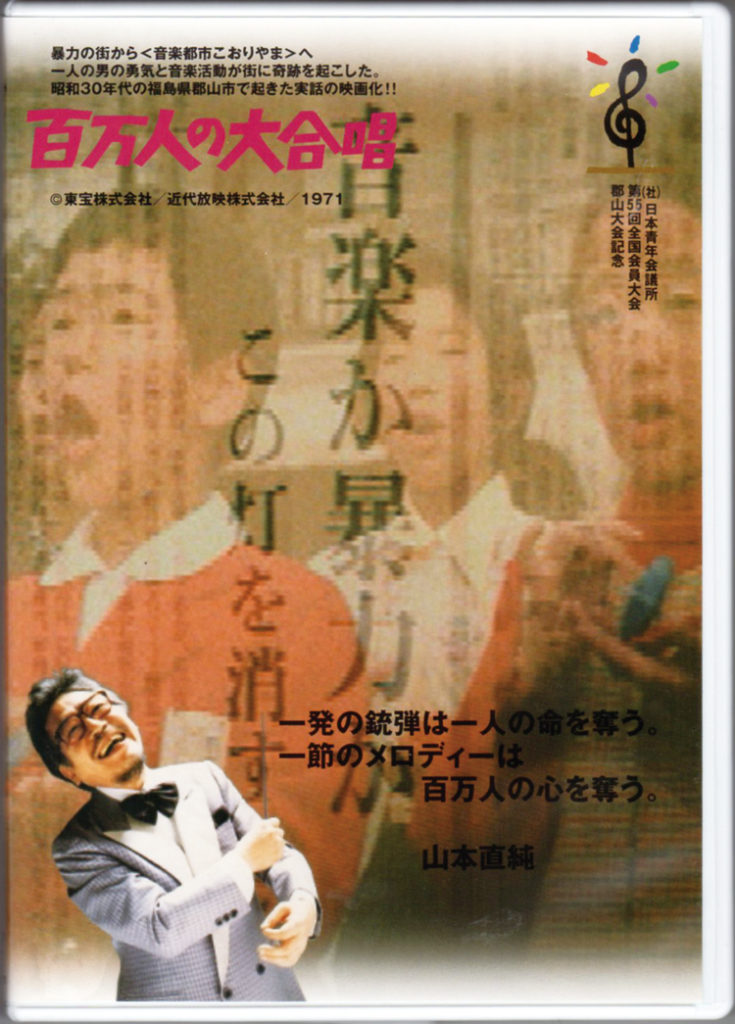
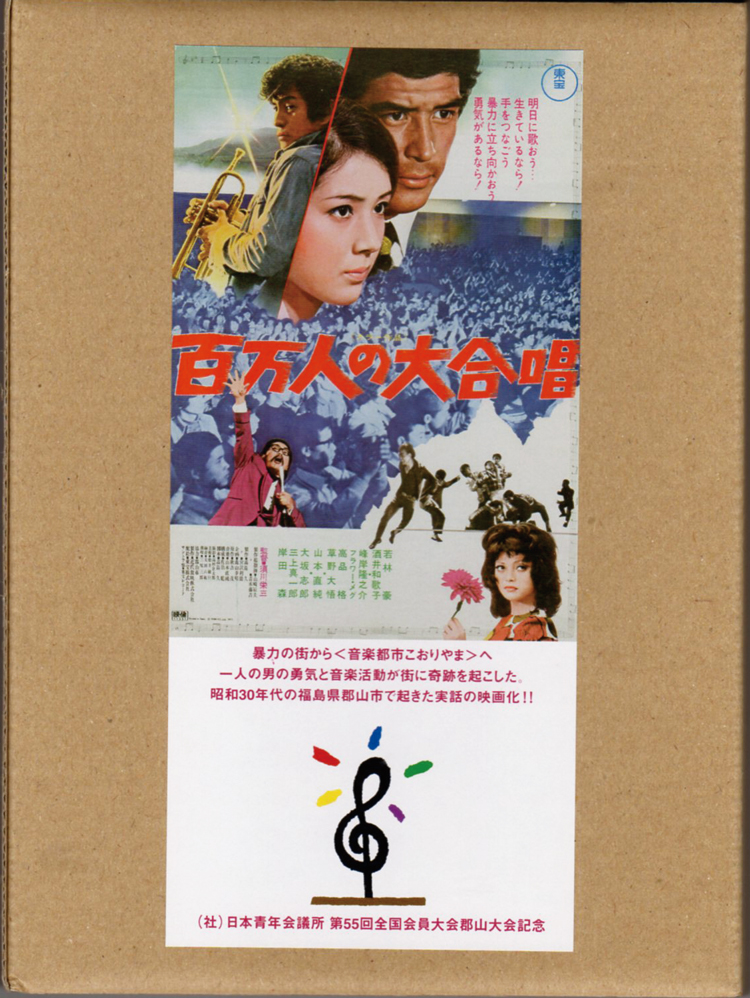
Casts: Go Wakabayashi
Wakako Sakai
Ryunosuke Minegishi (Toru Minegishi)
Flower Meg
Takuro Yoshida and others
General Music Conductor: Naozumi Yamamoto
Director: Eizo Sugawa
Produced by Kindai Hoho Co., Ltd.
Distribution: Toho
Cooperation: Koriyama City
96 min, Coloured
Manami’s impression of the movie.
Standing up to gangs with just the power of music seems unreal for nowadays, but the idea of ‘’changing something with the power of songs” still applies today, and I was amazed by the power of music. The townscape in the film was also interesting because there were some scenes that made me think, “I think I have been there”.
It’s difficult for everyone to sing together now due to the pandemic, but I learned a lot from this film, seeing how “the city of music” Koriyama should be represented.
For more ↓
The music history of Koriyama, Fukushima. Why Is it called ‘‘The City of Music’’? ~Showa era~ Vol.2