
【Traditional autumn festival preserved in Koriyama-city, Fukushima】 Annual Autumn Festival (Asakakunitsuko-jinja) ~Hachiman-sama Festival~
Covered by Style Koriyama in September 2017
【Traditional autumn festival preserved in Koriyama-city, Fukushima】
Sponsored Links
A festival where so many Mikoshi (portable shrines) gather can only be seen in Kōriyama City, Fukushima Prefecture.
“Hachiman-sama Festival – Experience the Annual Autumn Festivities at Asakakunitsuko-jinja”
The Annual Autumn Festival of Asakakunitsuko-jinja, locally known as “Hachiman-sama,” is a highlight of the community. This year, the festival was held over three days starting September 27th, filled with the spirited cheers of “Wasshoi!” We covered events such as “Ohayashi,” the “Dashi-matsuri,” and the “Mikoshi Togyō and Kangyō.” For those who are not yet familiar with this festival, we will also share its rich history and traditions.
Enjoy this video showcasing the Annual Autumn Festival of Asakakunitsuko-jinja.
History of festival
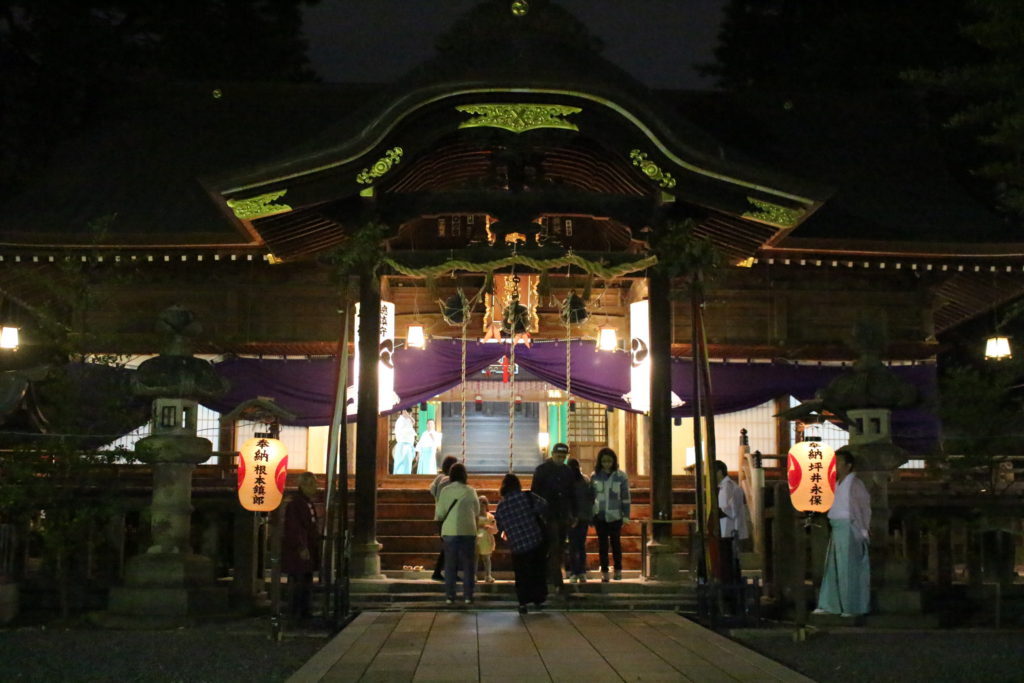
The festival has been held since ancient times, but Mikoshi (portable shrines) and Dashi (festival floats) began to appear during the Edo period.
By the end of the Edo period, Koriyama had developed into a thriving post town with a population of about 5,000. In his travelogue, Hachiro Kiyokawa described it as “the first post town in Mutsu-dochu.” As Koriyama prospered, the festival also grew in scale, and Dashi-yatai (festival floats) became part of the celebration in the mid-Edo period.
At that time, Koriyama belonged to the Nihonmatsu Domain. Local residents formally petitioned the domain for permission to hold the Mikoshi Togyo (procession of the portable shrine). After receiving official approval, the Mikoshi Togyo began in 1765.
Because Asakakunitsuko-jinja held particularly high status, the shrine was granted permission to use the domain lord’s family crest, the “Chigaibo-mon.” Even today, the crest is displayed in the shrine building alongside the “Tomoeno-gomon.”
What are Togyo and Kangyo?
Togyo is a sacred ceremony in which the deity leaves the shrine and travels through the community in a portable shrine called the Hon-mikoshi. During this procession, the deity symbolically visits and blesses the local area.
Kangyo is the ceremony in which the deity returns to the shrine building via the Omotesando (main approach) after three days of Togyo.
What kind of festival is the Annual Autumn Festival?
During the Annual Autumn Festival, the deities of Yahata-no-Okami, Inari-no-Okami, and Asaka-no-Okami (Asakakunitsukohitonenomi) of Asakakunitsuko-jinja are ceremonially transferred to mikoshi (portable shrines).
As the mikoshi process through the town, the bonds between the deities and the local community are strengthened, and the divine blessings are believed to spread throughout the area.
The festival is both a celebration of gratitude for a rich harvest and a prayer for the safety and prosperity of the community.
The mikoshi that carries the deity is also called a “Yashiro.”
Terms to know about festival
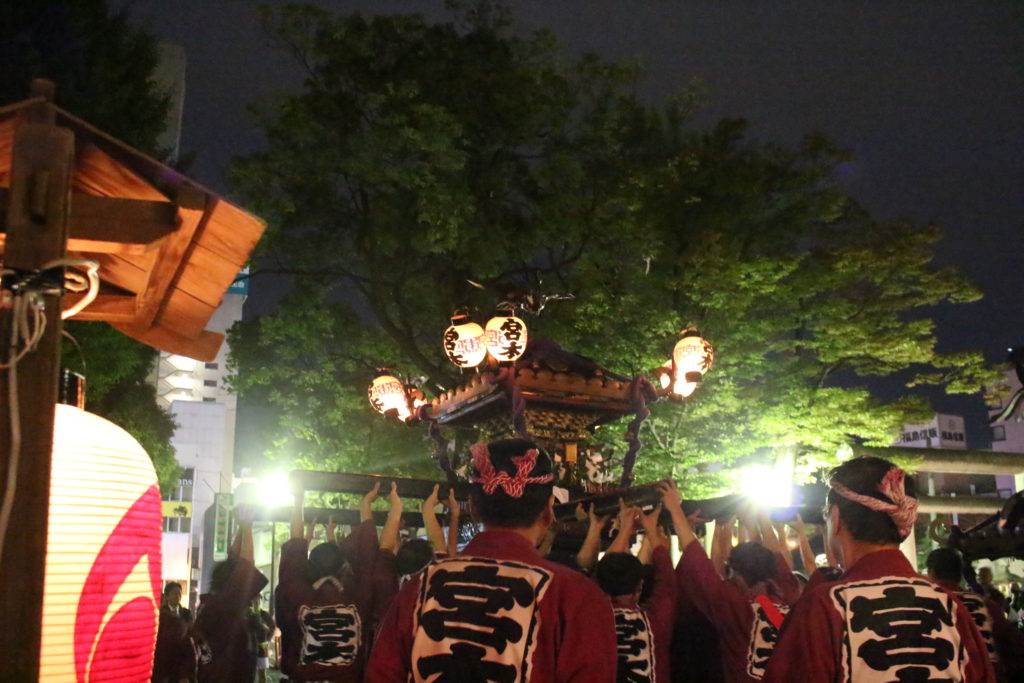
Hon-Mikoshi
The Hon-Mikoshi refers to the three main yashiro (portable shrine structures) in which the deities reside during the festival.
In addition to the Hon-Mikoshi, sacred amulets of the deities are placed in other mikoshi as well. This year, a total of 34 mikoshi carried these amulets.
Because the movements of the mikoshi can be sudden and dynamic, for safety reasons only designated participants are permitted to touch or carry them. Throwing water on the mikoshi is also prohibited. In principle, viewing the mikoshi from above is not allowed.
The counter “ki” is used to count mikoshi that carry sacred amulets.
Kami-machi and Shimo-machi
Since the mid-Edo period, the town has been divided into two areas along the shrine’s Omotesando (main approach) and Daikan-koji Street: the southern area, known as Kami-machi, and the northern area, known as Shimo-machi.
The starting point of the Kangyo (return procession of the mikoshi) alternates each year between Kami-machi and Shimo-machi.
What is Miyamoto?
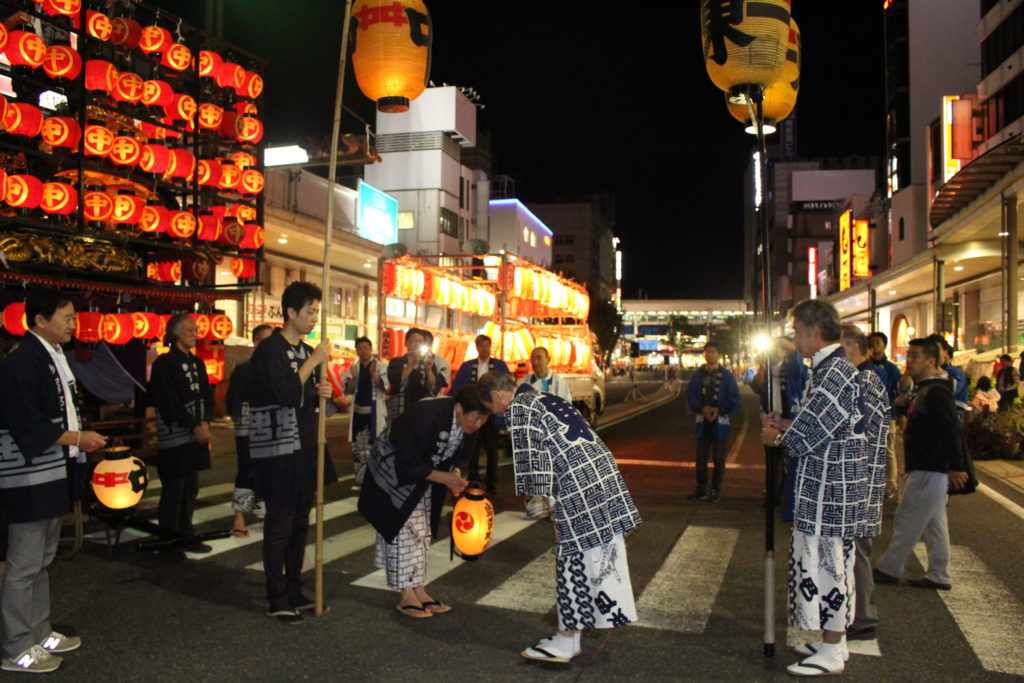
Miyamoto refers to the town council formed by the neighborhoods surrounding Asakakunitsuko-jinja.
This council plays a central role in the festival and is responsible for organizing and overseeing the Kangyo (the return procession) of the Hon-Mikoshi.
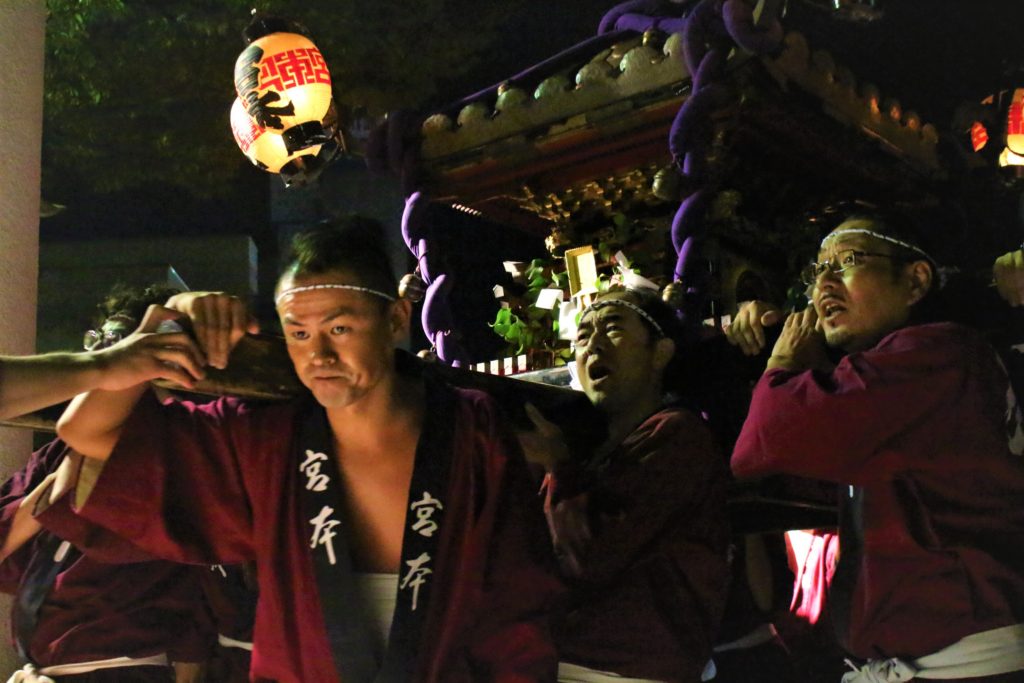
Lanterns at the Front and Back of the Mikoshi
At both the front and back of each mikoshi, there are lantern bearers. In the front, a participant carries a Takahari lantern, and at the rear, another carries an Atozume lantern. The space between these two lanterns marks the position of the mikoshi.
It is said that the pole of the Takahari lantern is intentionally long so that, when leaning forward, the bearer can assert presence and strength against others. Because the lantern can only move forward, the person carrying it plays a crucial role in negotiating space—especially when the main road in front of the station becomes crowded with many mikoshi.
In the past, there were even occasions when disputes broke out as groups competed for position during the procession.
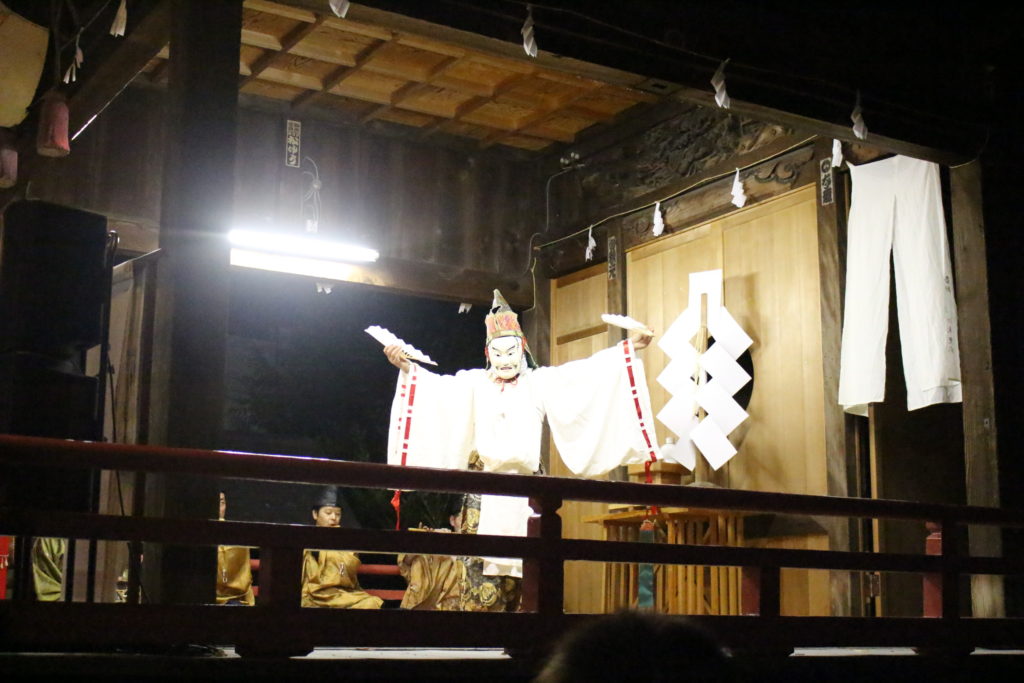
Juni Kagura
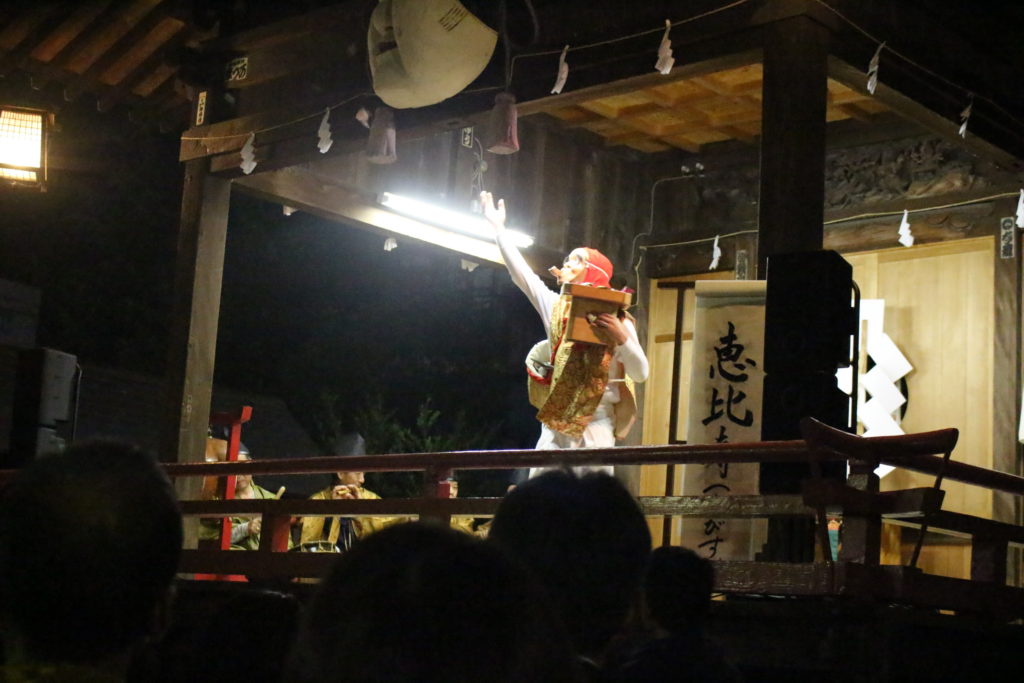
Mikagura are formal sacred dances rooted in Japanese mythology and described in ancient texts such as the Kojiki. Traditionally, there are 36 different dance programs.
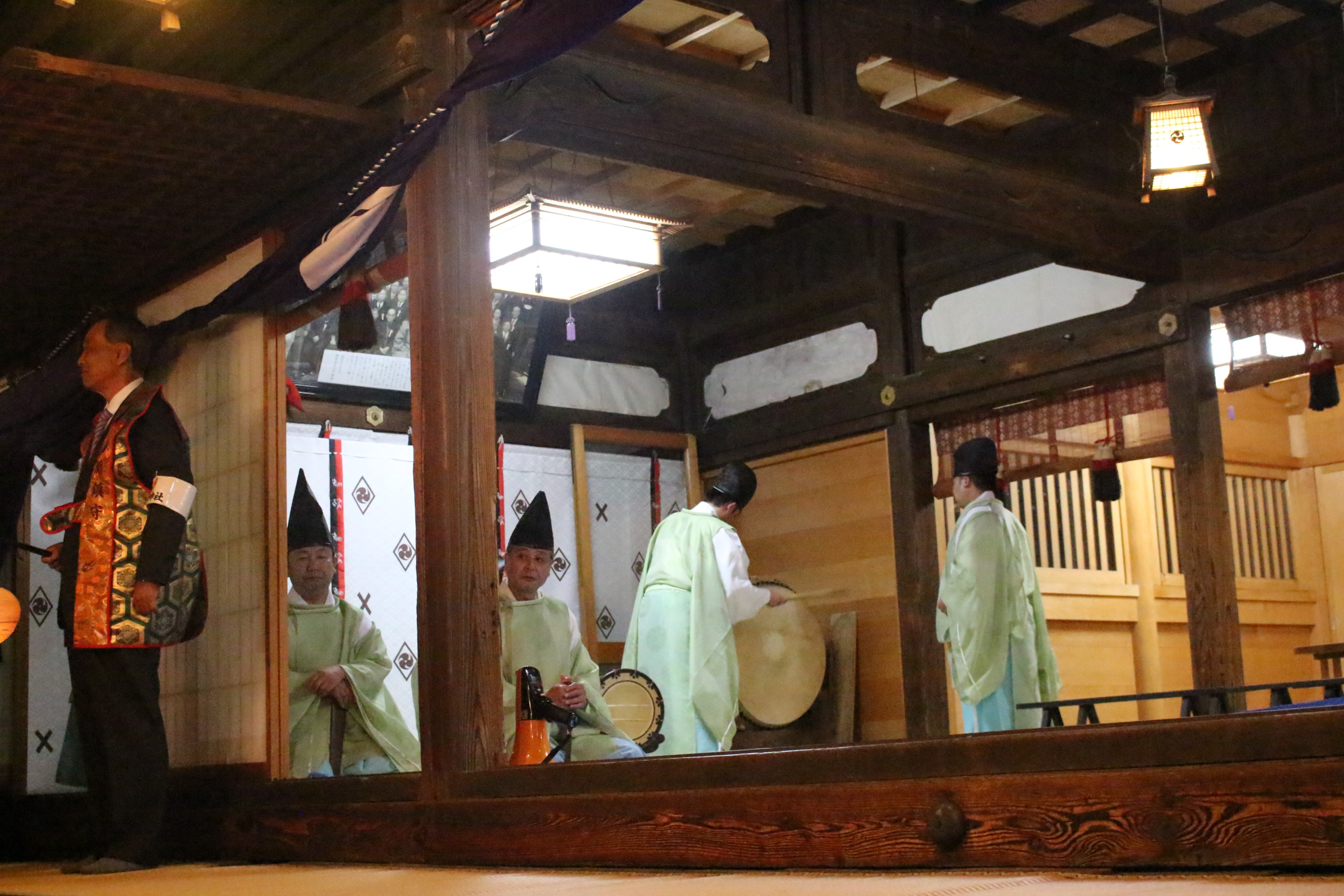
Juni Kagura is a special selection of these sacred dances, performed only once a year on September 28th and 29th during the festival. The performances take place in the Mikagura Hall at Asakakunitsuko-jinja.
During Juni Kagura, many well-known deities from Japanese mythology appear on stage through these elegant and symbolic dances, offering a rare opportunity to experience this ancient spiritual tradition.
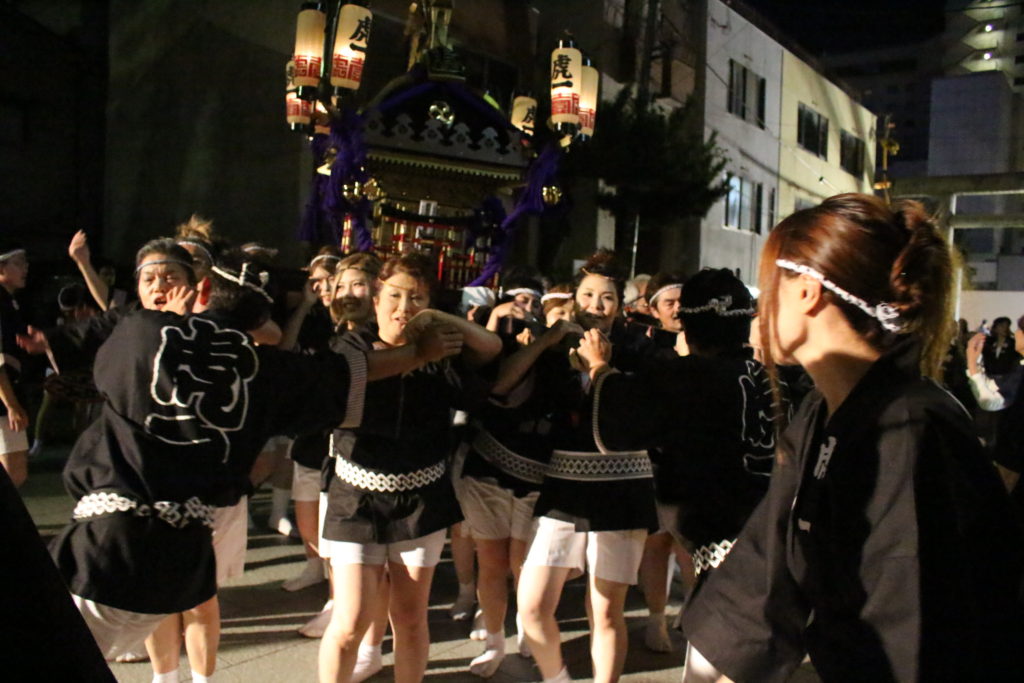
Ko Groups that Carry the Mikoshi
The mikoshi are carried by Ko (traditional festival associations) that belong to each town council of the ujiko (parishioners) of Asakakunitsuko-jinja.
Each neighborhood has its own Ko group responsible for participating in the procession and supporting the festival.
Among them, Asakasuiren is unique, as it operates more like a club-style Ko organization.
Report on Ohayashi
We interviewed members of Honikko about their involvement in Ohayashi (traditional festival music).
What is Motoichiko?
“Motoichi” refers to Motomachi 1-chome, a neighborhood in the area.
“Ko” means the festival association or organization in each town that is responsible for participating in and supporting the festival.
Therefore, Motoichiko is the Ko (festival association) representing Motomachi 1-chome.
How many times do you practice before the festival?
We practice a total of six times before the festival.
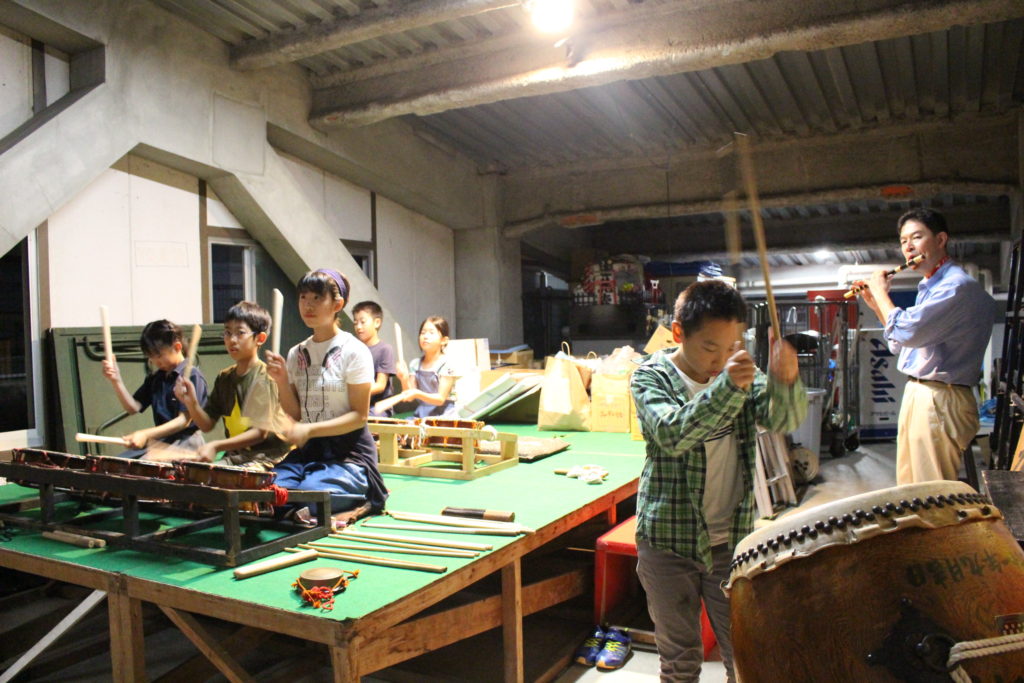
Children are performing—how do you teach them?
Children between the ages of 3 and 15 take part in the performance. Some of them have no prior musical experience, so we begin by letting them watch and listen to actual performances.
We also teach adults, but the children gradually learn by observing and copying the more experienced players. Through this hands-on approach, they naturally develop their skills year by year.
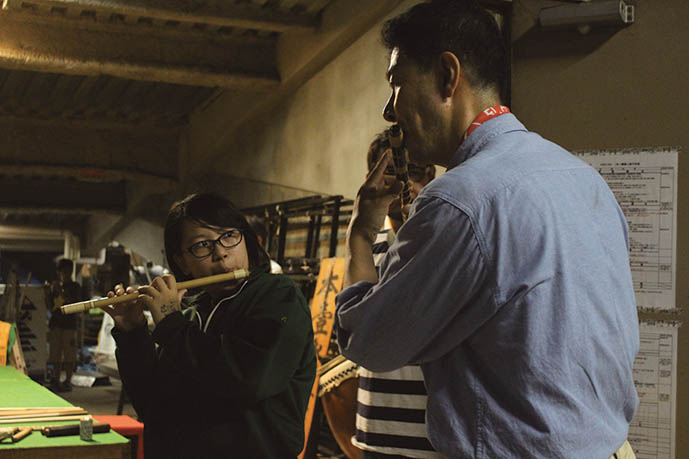
What kind of instruments do you use, and how many songs do you play?
We use small drums, large drums, and flutes.
From Nihonmatsu’s traditional Matsuri-bayashi (festival music), we perform three pieces: “Shangiri,” “Okazaki,” and “Kakube.”
Other town councils, except for Honikko, perform “Hachiman-bayashi.” This music was arranged from Nihonmatsu’s Matsuri-bayashi by Yoshikazu Sato of Asakakunitsuko-jinja and Shinji Saito of Nihonmatsu Takeda. Hachiman-bayashi consists of a total of four pieces.
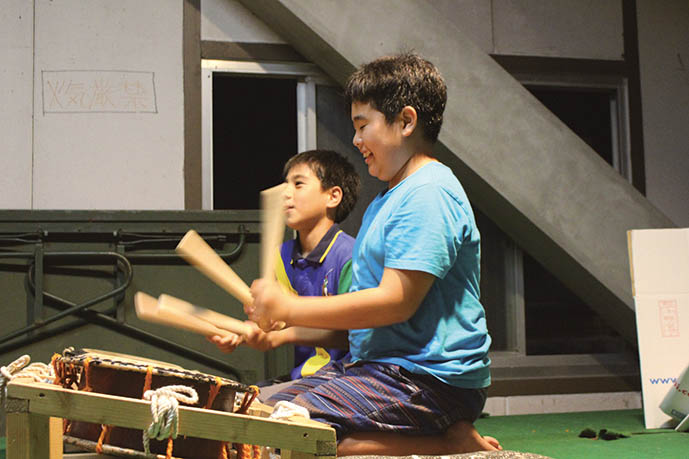
What is the most attractive point of “Ohayashi”?
Ohayashi plays an essential role in energizing the entire festival. The music naturally draws people in and lifts the atmosphere.
Even after the festival has ended, the melodies stay with us—we often find the songs still playing in our minds for a week afterward.
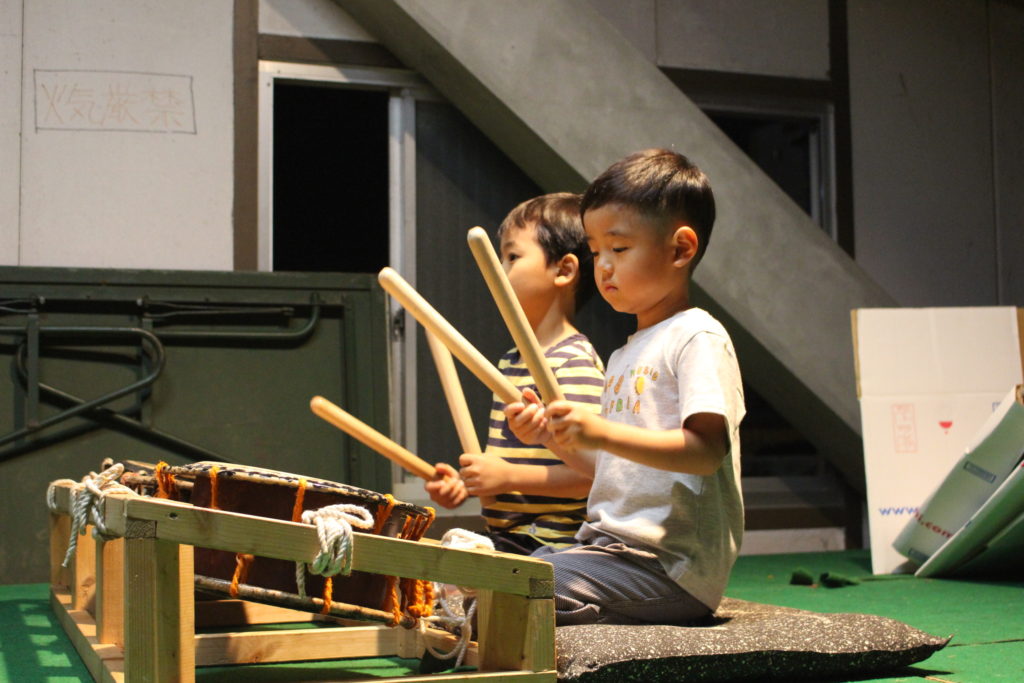
Do you have any difficulties?
Maintaining the festival traditions is not easy, including caring for and maintaining the instruments.
Playing the large drums and flutes is particularly challenging. Senior members patiently guide and teach the younger players, passing down the skills and spirit of the festival to the next generation.
What are the pleasures of the festival?
For many members of the town council, life revolves around the festival—even during the preparation period.
Although many people now live far away, they return home for the festival, and it is often the only time of year we see them.
We believe people are drawn back by the happiness and nostalgia they experienced at the festival when they were children.
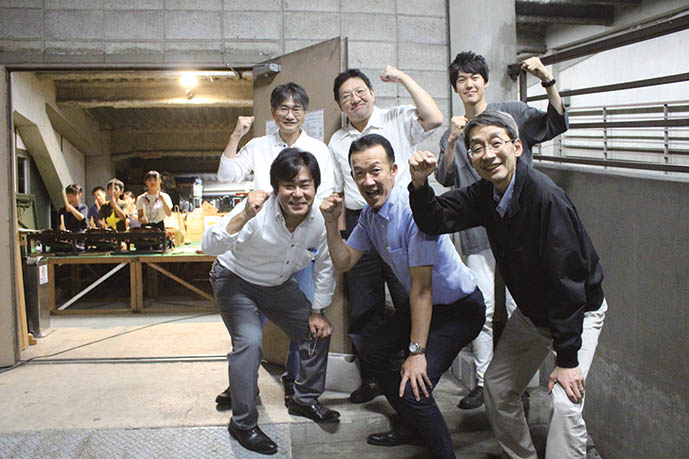
About Dashi Festival
We interviewed Mr. Teruji Takano, Secretary General of the Society for the Preservation of Hachiman-bayashi, about the Dashi Festival and its traditions.
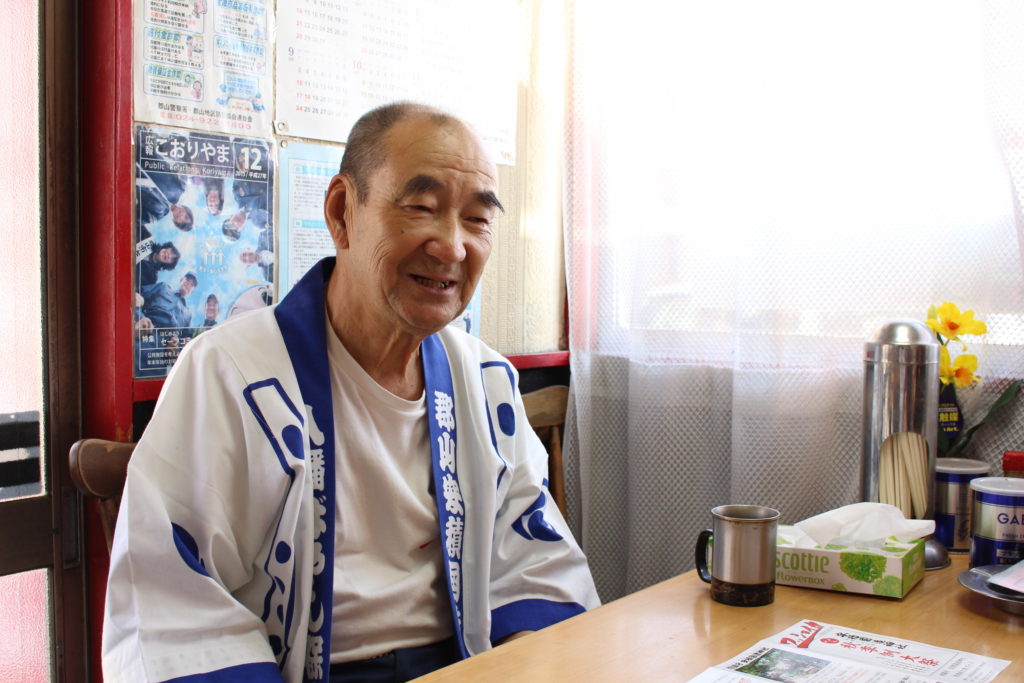
What is the highlight of the Dashi Festival?
I believe the highlights of Hachiman-bayashi are the children’s “Ohayashi-kurabe” performances and the Dashi Festival held during the main celebration.
These performances showcase the energy and skill of the young players and bring great excitement to the festival.
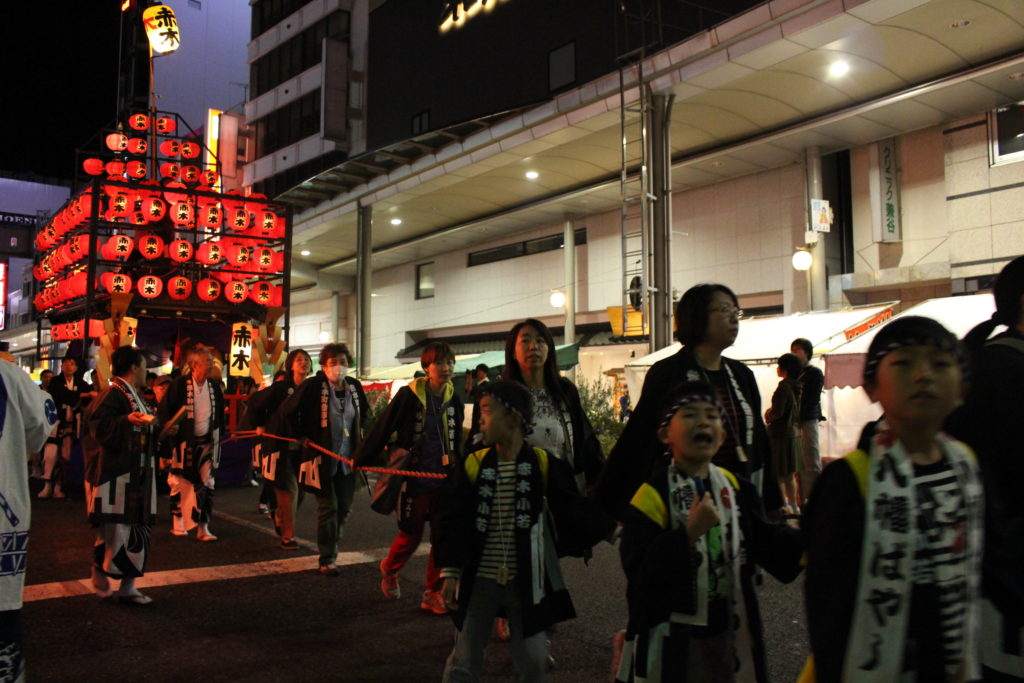
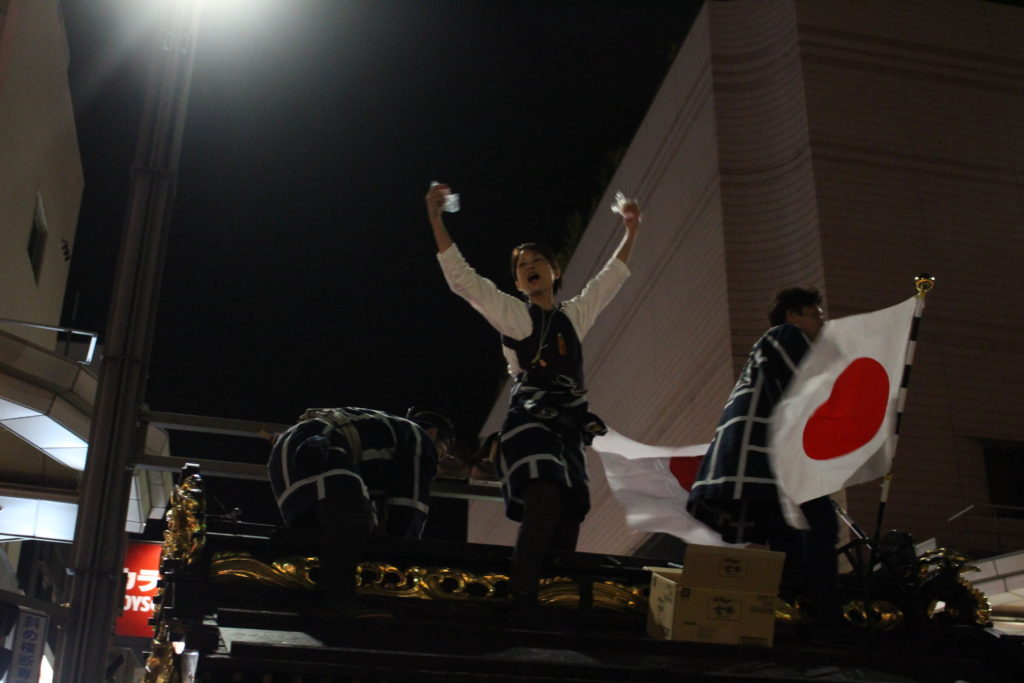
Is there anything you would like to pass on to the next generation?
There are things that can only be learned through sincere and dedicated practice. Those experiences will benefit them throughout their lives.
For example, if they do not hold the drumsticks properly, it could lead to injury. Learning the correct form and discipline is important—not only for safety, but also for respect toward the tradition.
Younger children are always watching the older performers, and we want them to feel that sense of responsibility. In a way, the deities are watching as well.
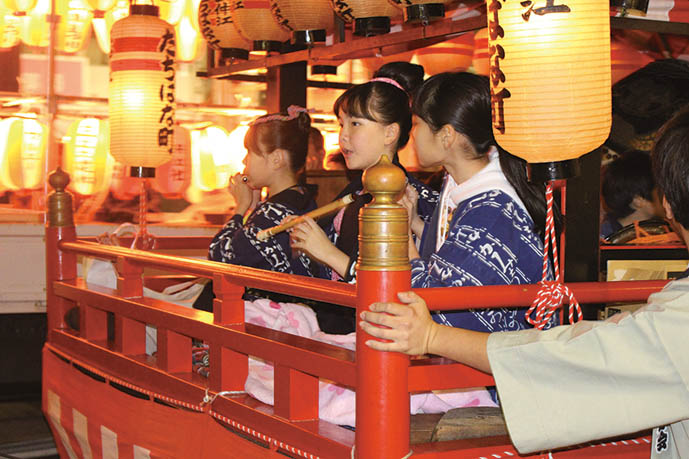
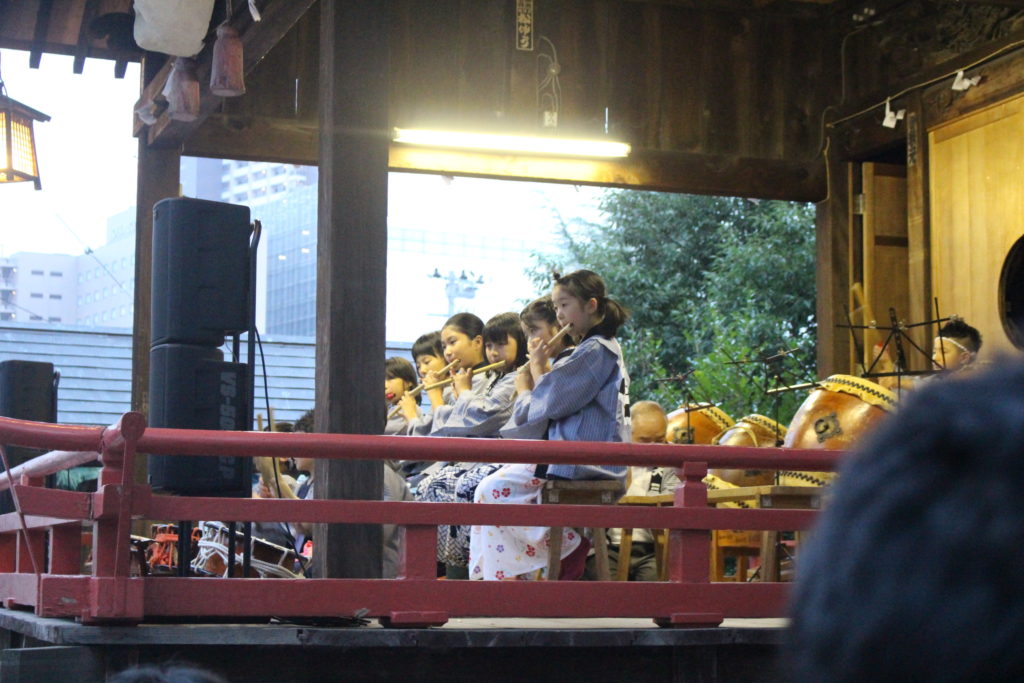
“Ohayashi-kurabe”
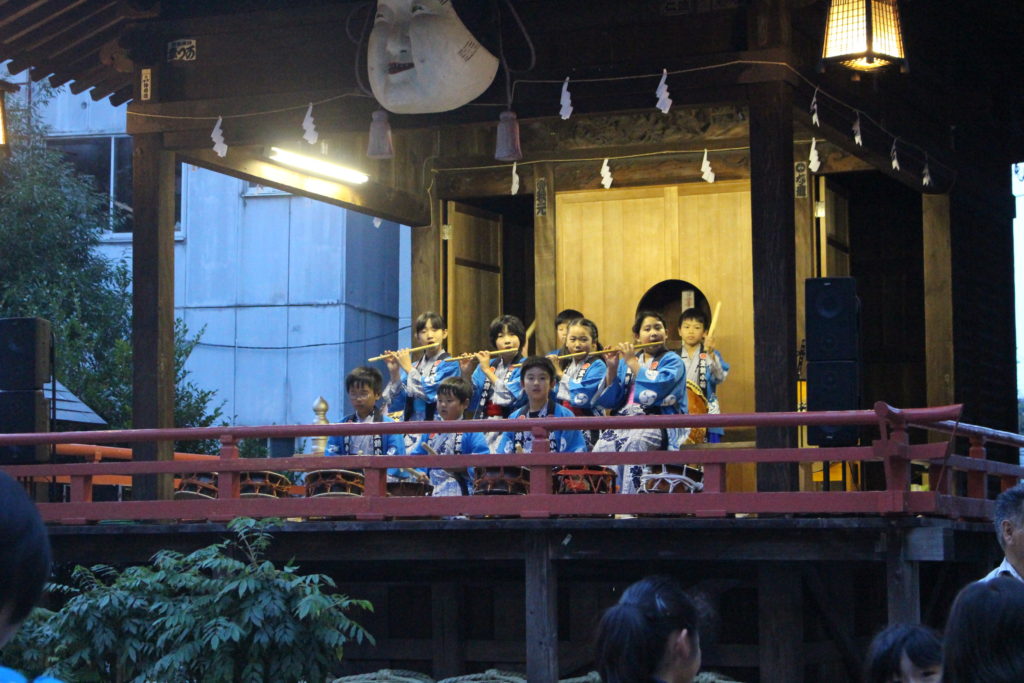
On September 27th from 4:30 p.m., children from each town council take turns giving dedicated performances for about 40 minutes.
The performances are held in the shrine precincts and in the Kagura Hall of Asakakunitsuko-jinja, creating a lively and heartwarming atmosphere as each group showcases their skills.
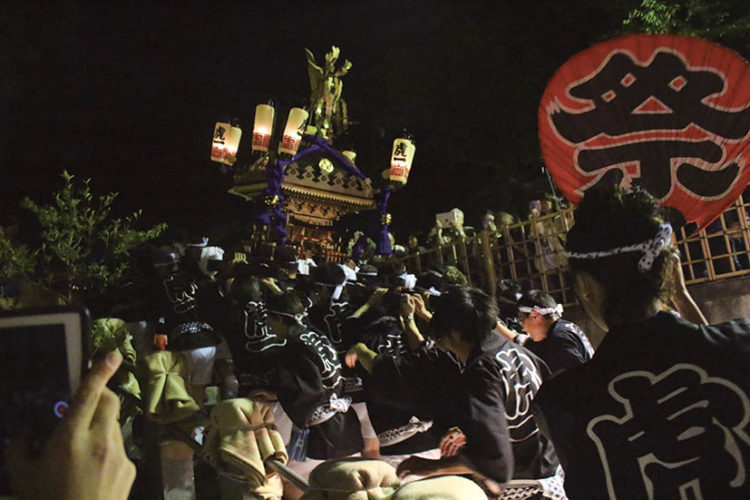
Mikoshitogyo and Kangyo
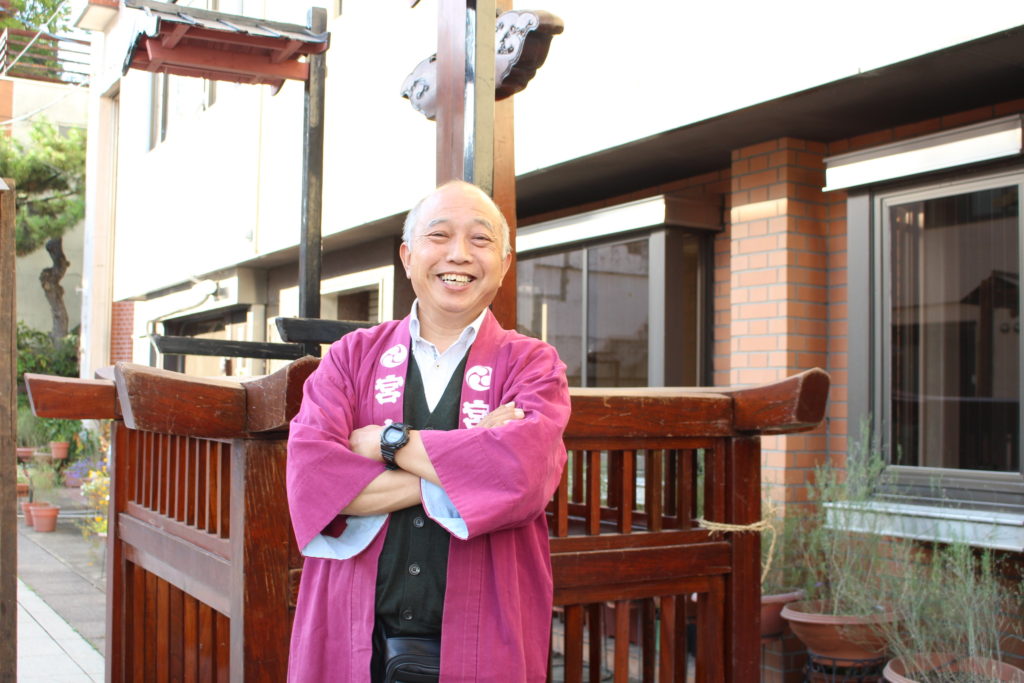
We interviewed Mr. Takahiko Sugiyama who is a chairman of Miyamoto youth association.
Could you please tell us about the Mikoshi?
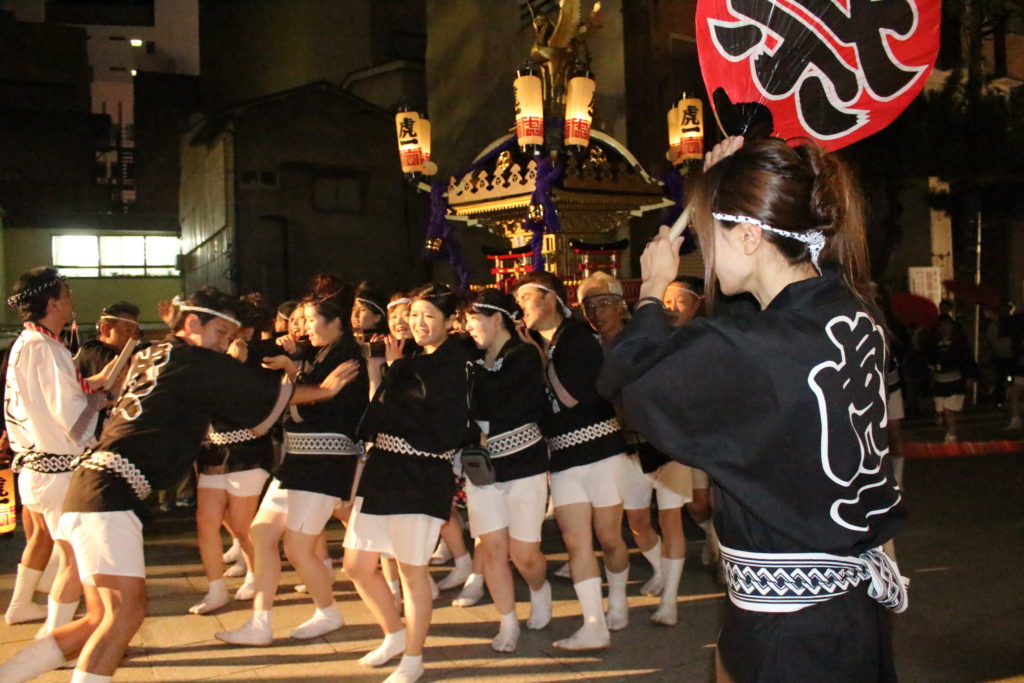
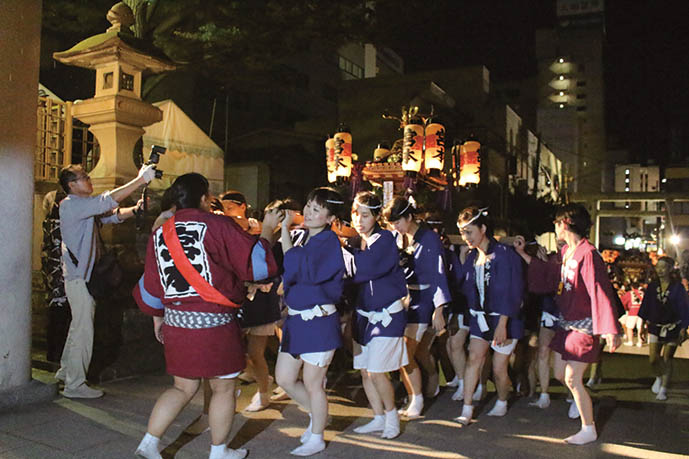
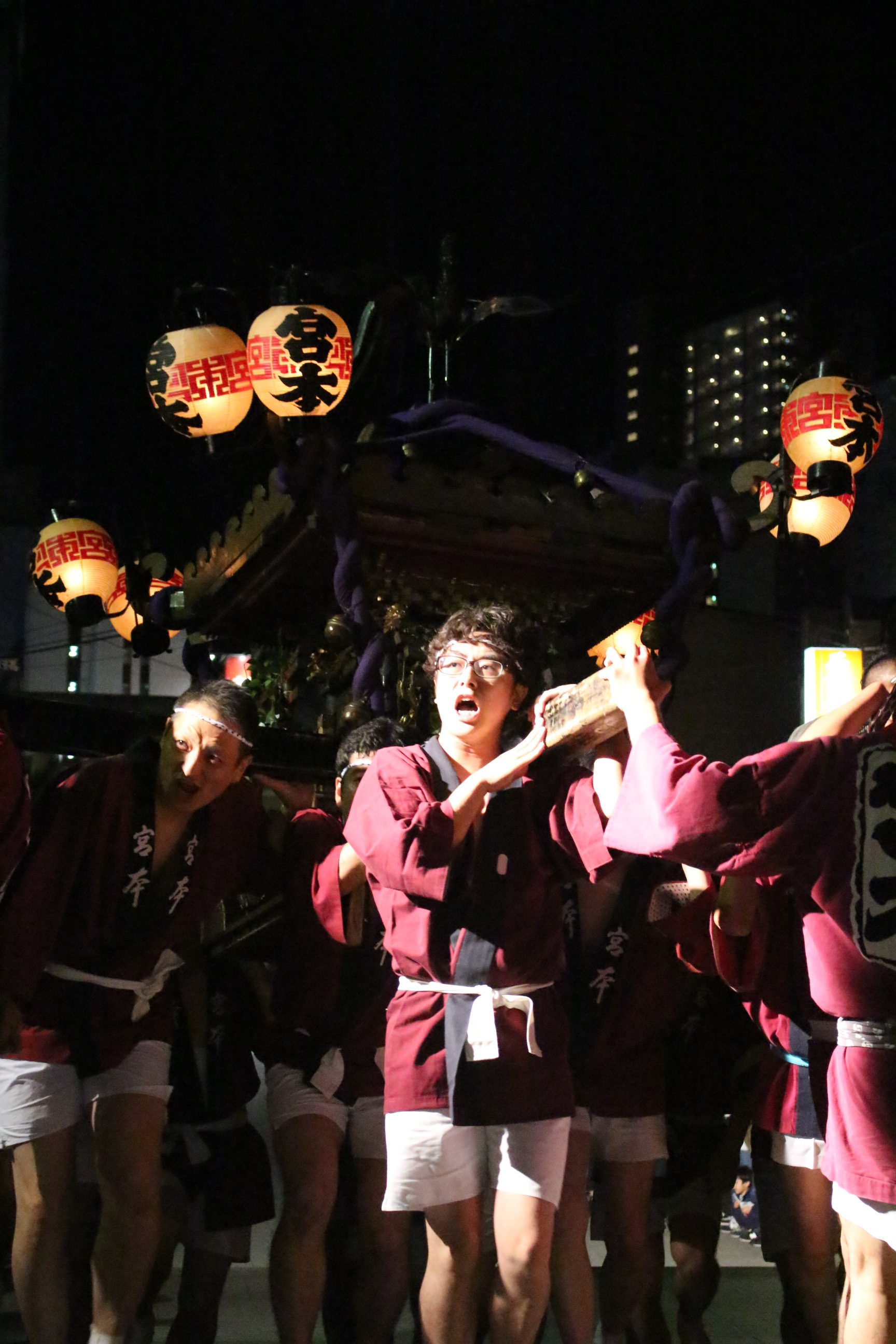
In 2017, an Onna-Mikoshi (women’s mikoshi) was added, and today a total of 34 mikoshi take part in the Kangyo (return procession).
The mikoshi from each town play an important role in energizing the festival, serving as guides and escorts for the Hon-Mikoshi.
The style of mikoshi in Koriyama is known as Edo-mikoshi. Unlike the more
How do you decide the positions of the mikoshi carriers?
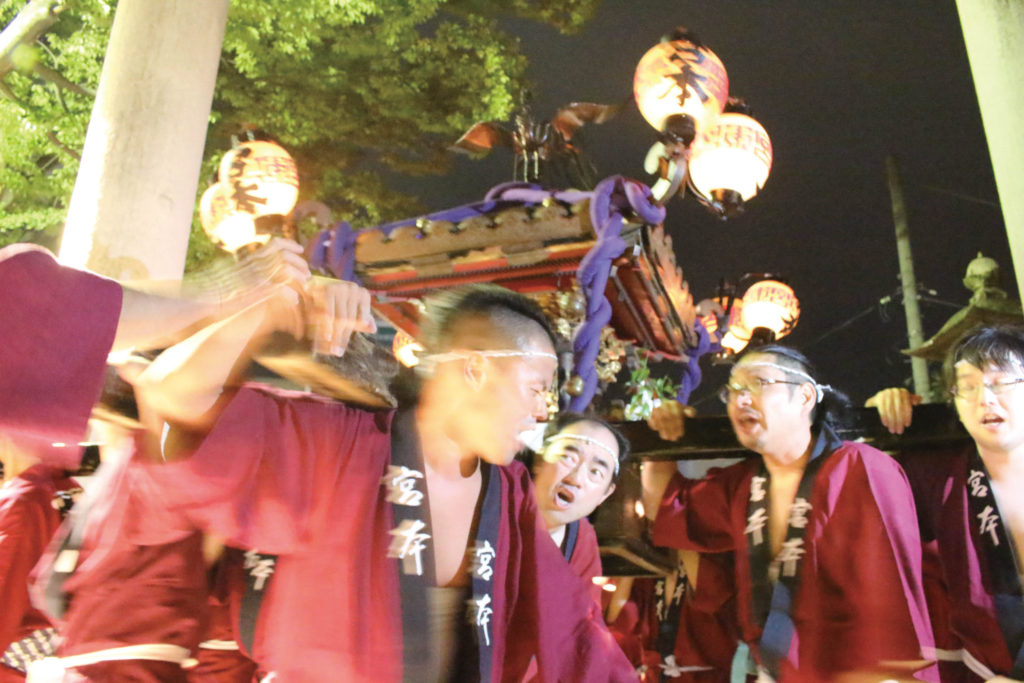
Positions are generally decided based on height. Taller participants carry the horizontal poles, as these rest on the vertical supports of the mikoshi.
This arrangement helps maintain balance and stability during the procession.
How can people enjoy watching the Mikoshi’s Miyairi?
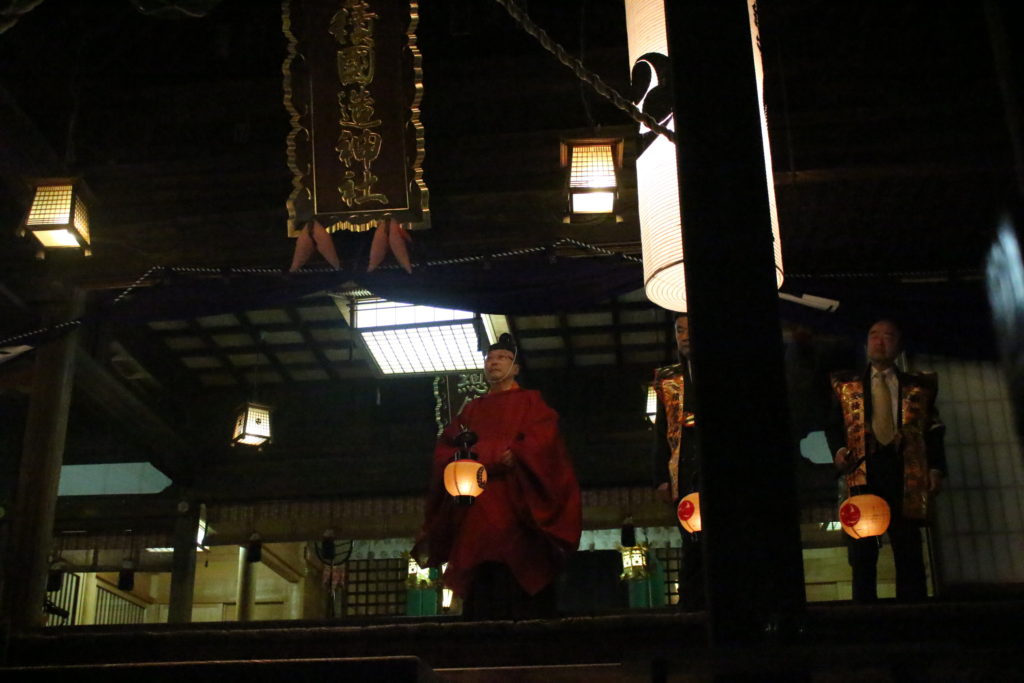
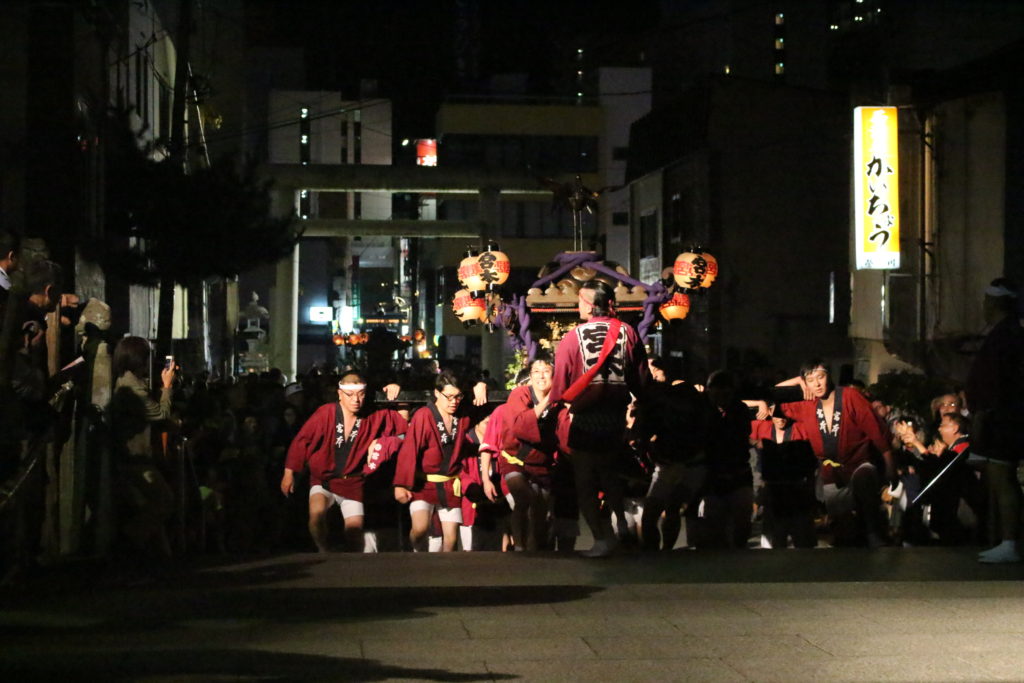
During the Miyairi (the moment when the mikoshi returns to the shrine), there are times when the mikoshi moves back and forth instead of immediately entering the shrine grounds. At those moments, I guide the bearers along the Omotesando, telling them that the deities are not yet ready to return to the shrine.
This is one of the most intense and demanding parts of the procession. The bearers must repeatedly go up and down the shrine steps while carrying the heavy mikoshi.
It is especially challenging for the bearers of the third Hon-Mikoshi, as it remains until the very end of the Kangyo. Their endurance and determination truly bring the festival to a powerful conclusion.
Are there any wrap-up parties or gatherings among the participants?
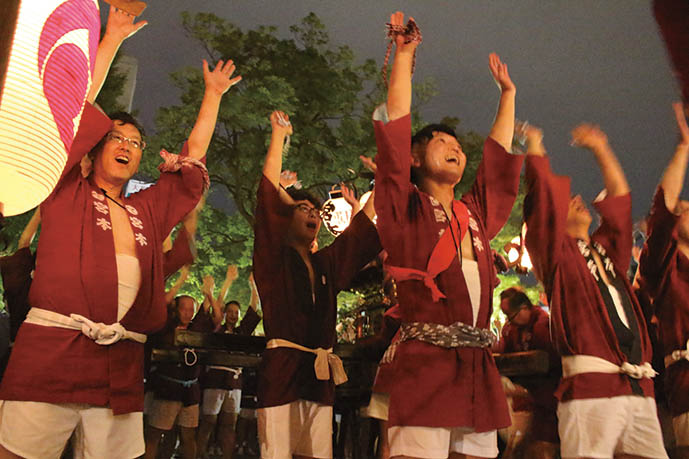
After the festival, we hold a gathering called Naorai, where everyone shares food and drinks together.
It is a time to celebrate the successful completion of the festival and to give thanks that everyone returned safely without injuries.
When the Miyairi takes place after 10:00 p.m., the Naorai sometimes continues until after midnight, as participants relax and reflect on the long and meaningful days of the festival.
A Message for the Future of the Festival
In recent years, we have felt saddened to see that some towns are no longer able to bring out their mikoshi and dashi due to a shortage of participants.
The festival is supported by the dedication and cooperation of the community. We hope that more people will join together to keep the spirit alive.
Let us work hand in hand to energize the festival and preserve this wonderful tradition for future generations.
Festival Schedule
September 27th
10:30 a.m. – Annual Autumn Festival Ceremony
2:00 p.m. – Dedication: Children’s Sumo Matches
(Held at the Dance Hall of Asaka Kindergarten)
4:30 p.m. – Dedication: Hachiman-bayashi “Ohayashi Kurabe”
(Held at the Kagura Hall)
September 28th
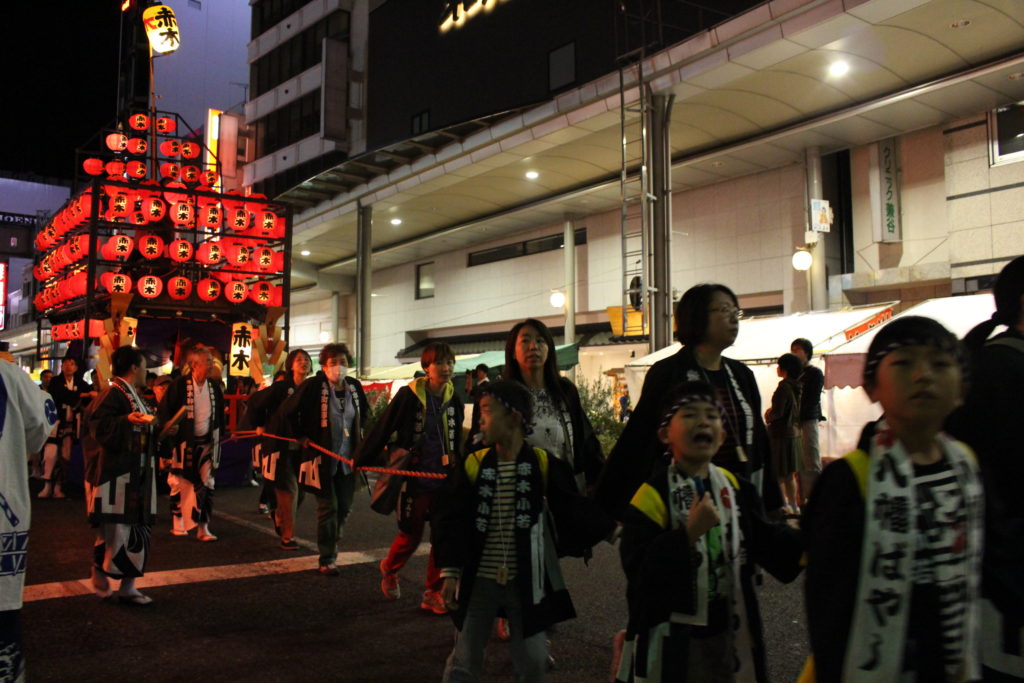
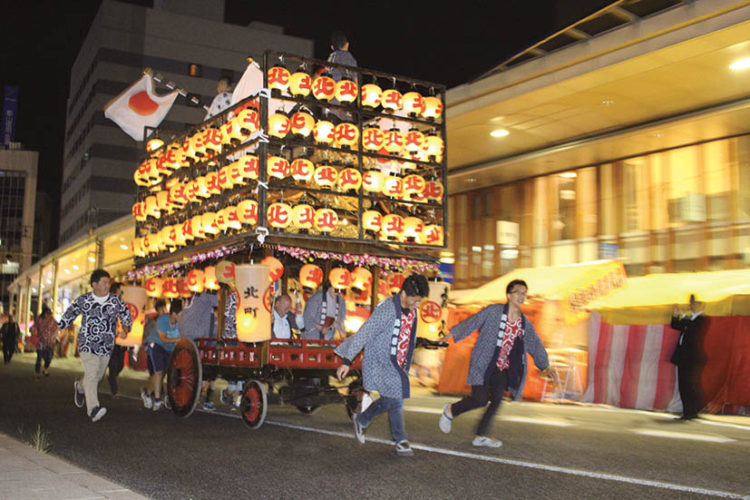
7:00 p.m. – Dashi Festival
(Held at Festival Square on the main road in front of the station)
7:00 p.m. – Juni-kagura
(Held at the Kagura Hall)
September 29th
7:00 p.m. – Mikoshi Kangyo (Return Procession)
(Held at Festival Square on the main road in front of the station)
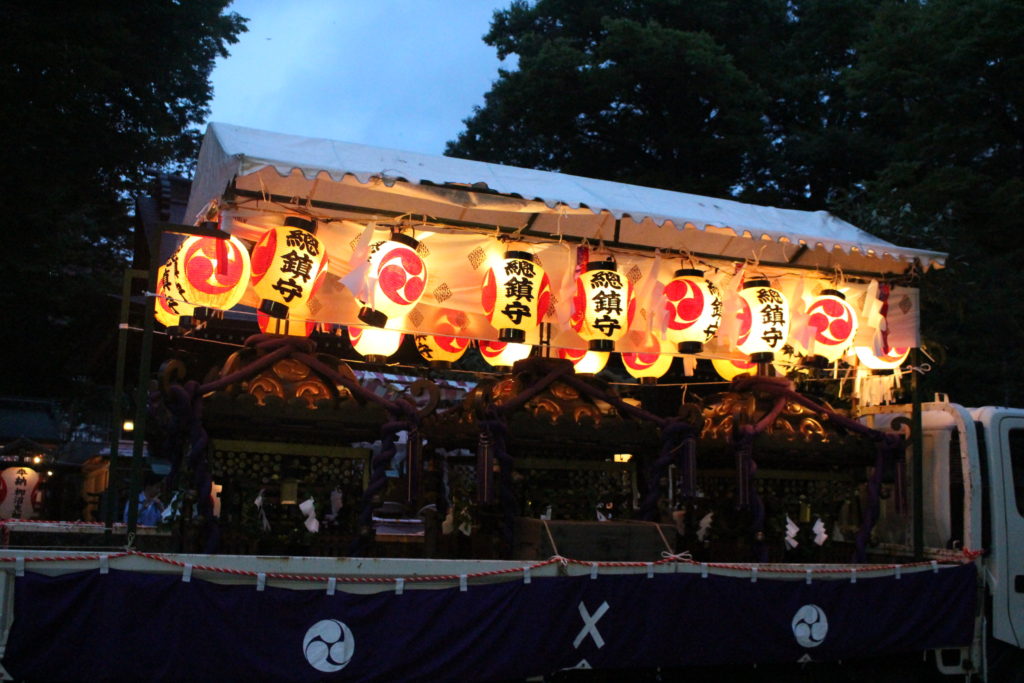
↑ Sanja-Mikoshi waiting for Togyo
All mikoshi depart from Festival Square and proceed toward Asakakunitsuko-jinja, passing through Nakamachi Crossing and along the Omotesando (the shrine’s main approach).
7:00 p.m. – Juni-Kagura
(Held at the Kagura Hall of Asakakunitsuko-jinja)
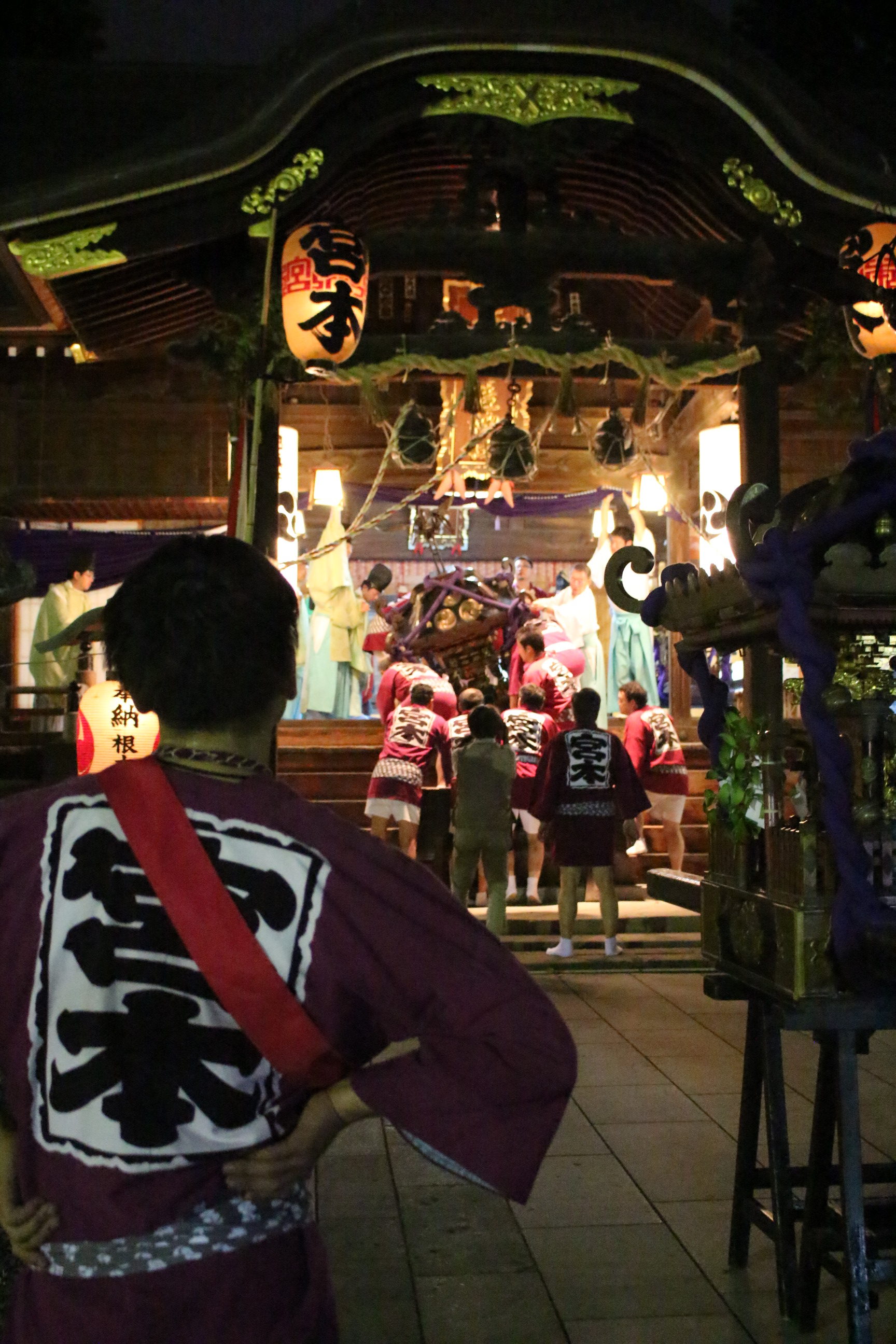
Around 9:00 p.m. – Miyairi of the Hon-Mikoshi
(The main mikoshi enter Asakakunitsuko-jinja via the Omotesando)
Three Days Filled with Spirit and Excitement
After Covering the Annual Autumn Festival of Asakakunitsuko-jinja
“Hachiman-sama’s Autumn Festival,” where people come together to carry mikoshi and parade dashi floats, has long been cherished by the residents of Koriyama.
The Onna-Mikoshi is powerful and inspiring, and the mikoshi and dashi from each town council bring their own unique energy and pride to the streets. Every part of the festival is vibrant, moving, and full of community spirit.
Hachiman-bayashi celebrated its 40th anniversary in 2018. As residents of Koriyama—a city known for its love of music—we hope to continue supporting and energizing traditional Ohayashi and Okagura for generations to come.
Here we go — Wasshoi!!
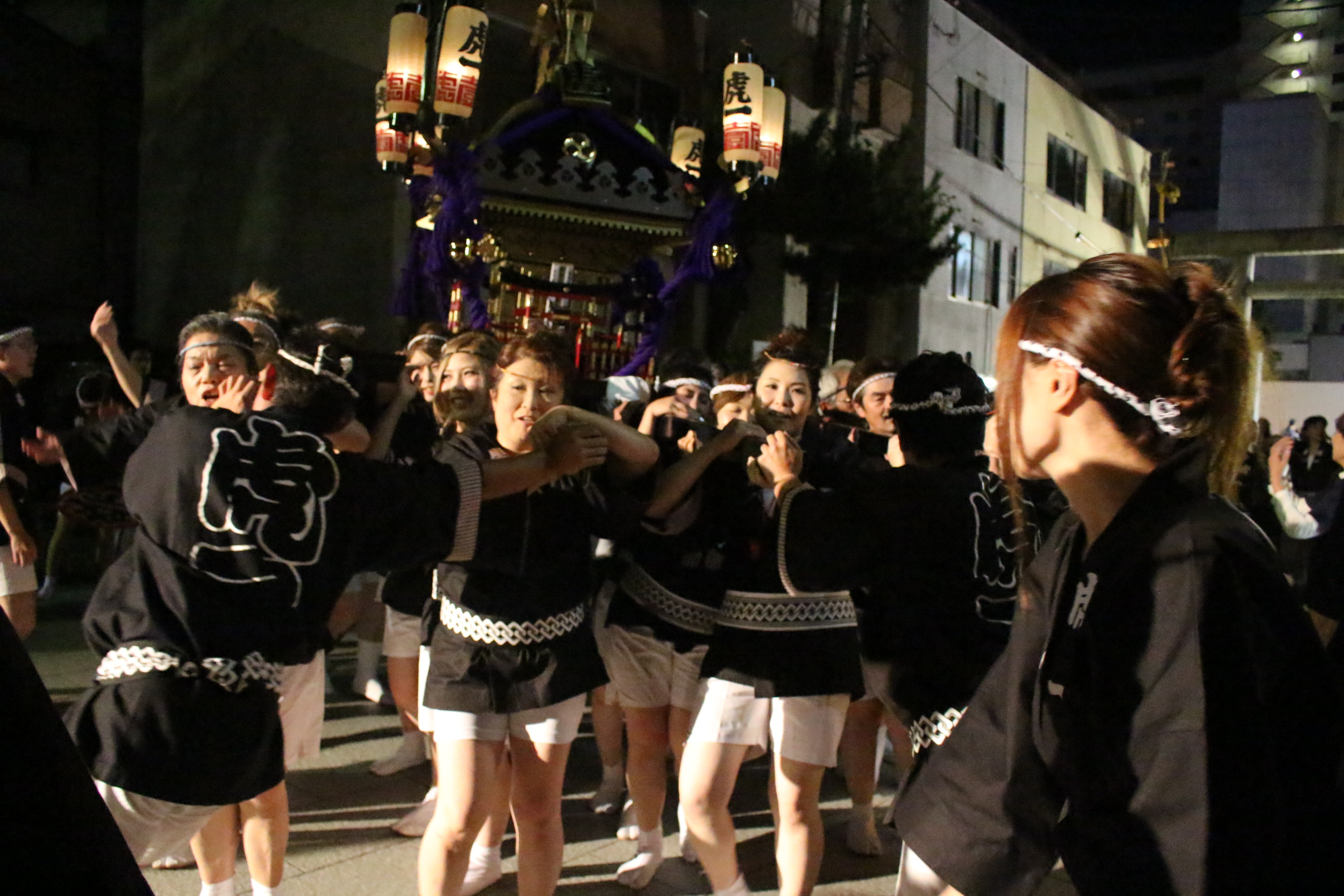
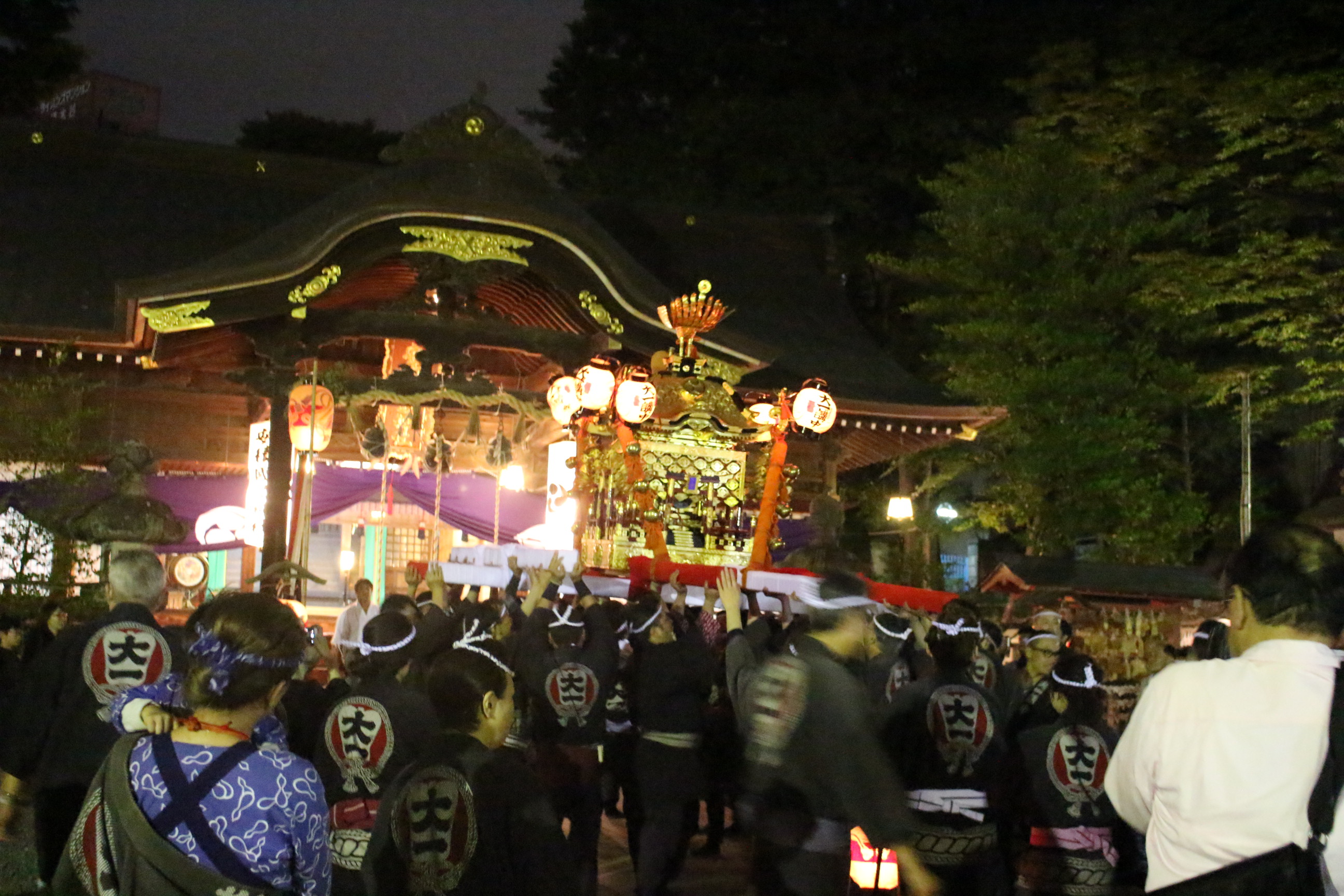
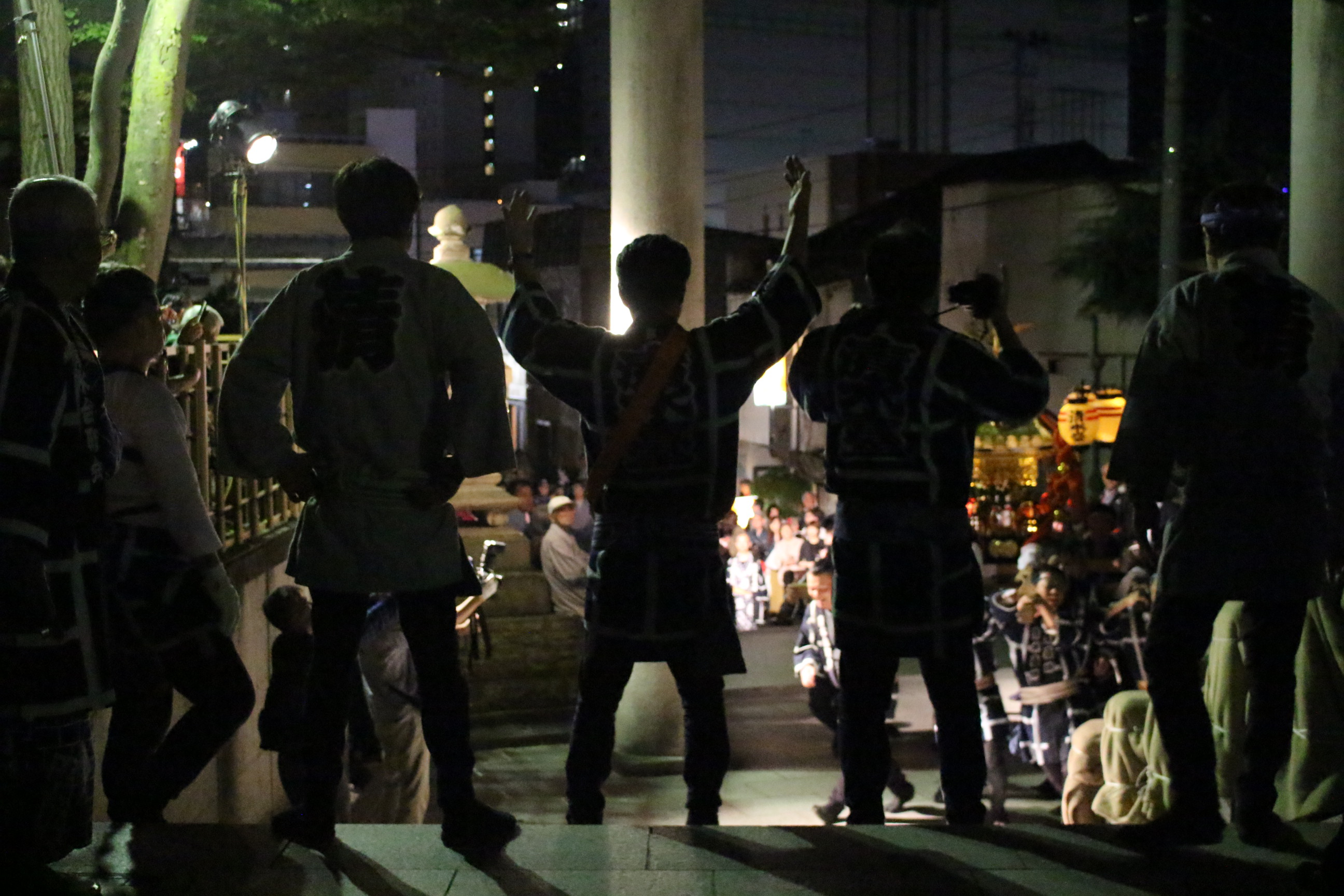
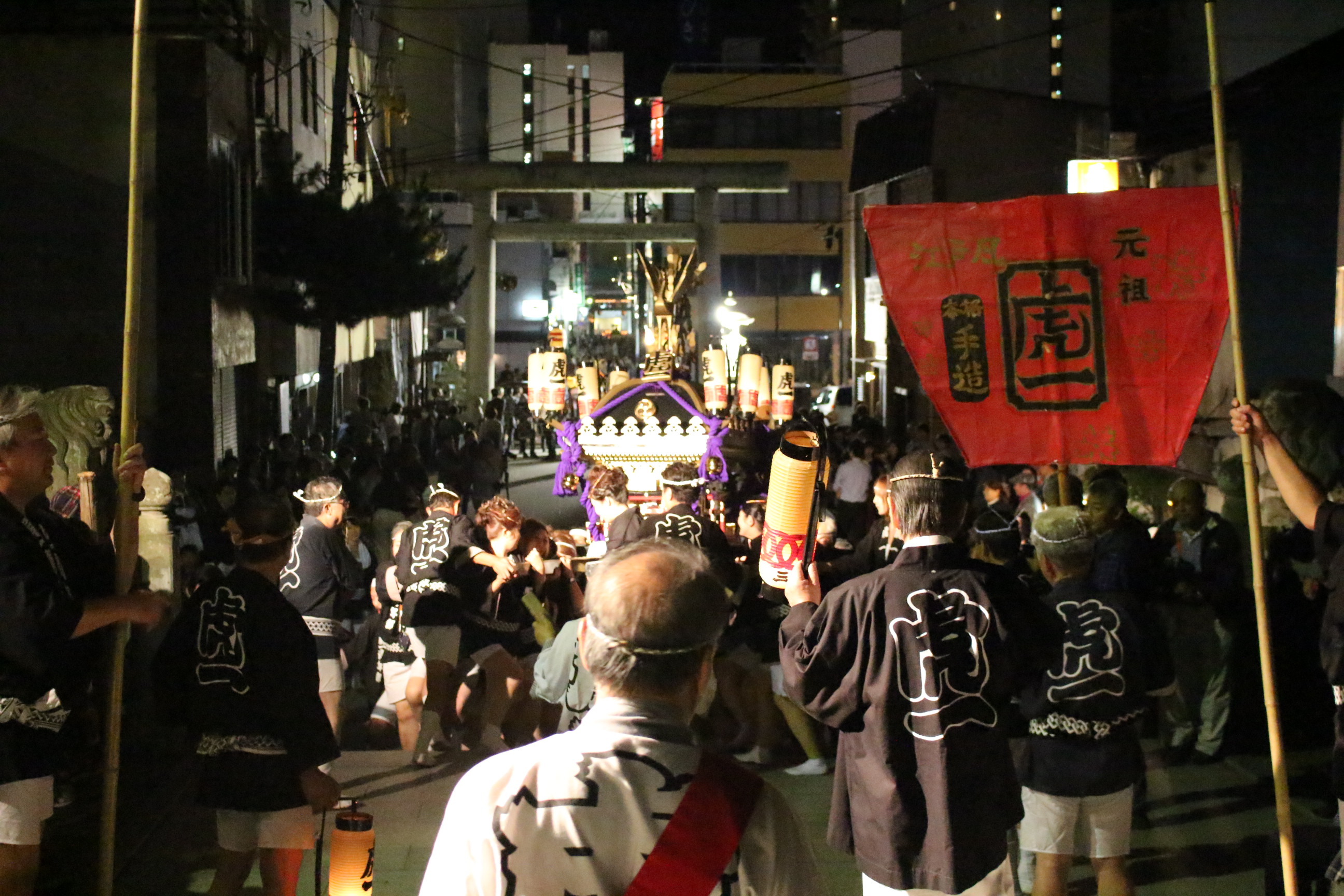
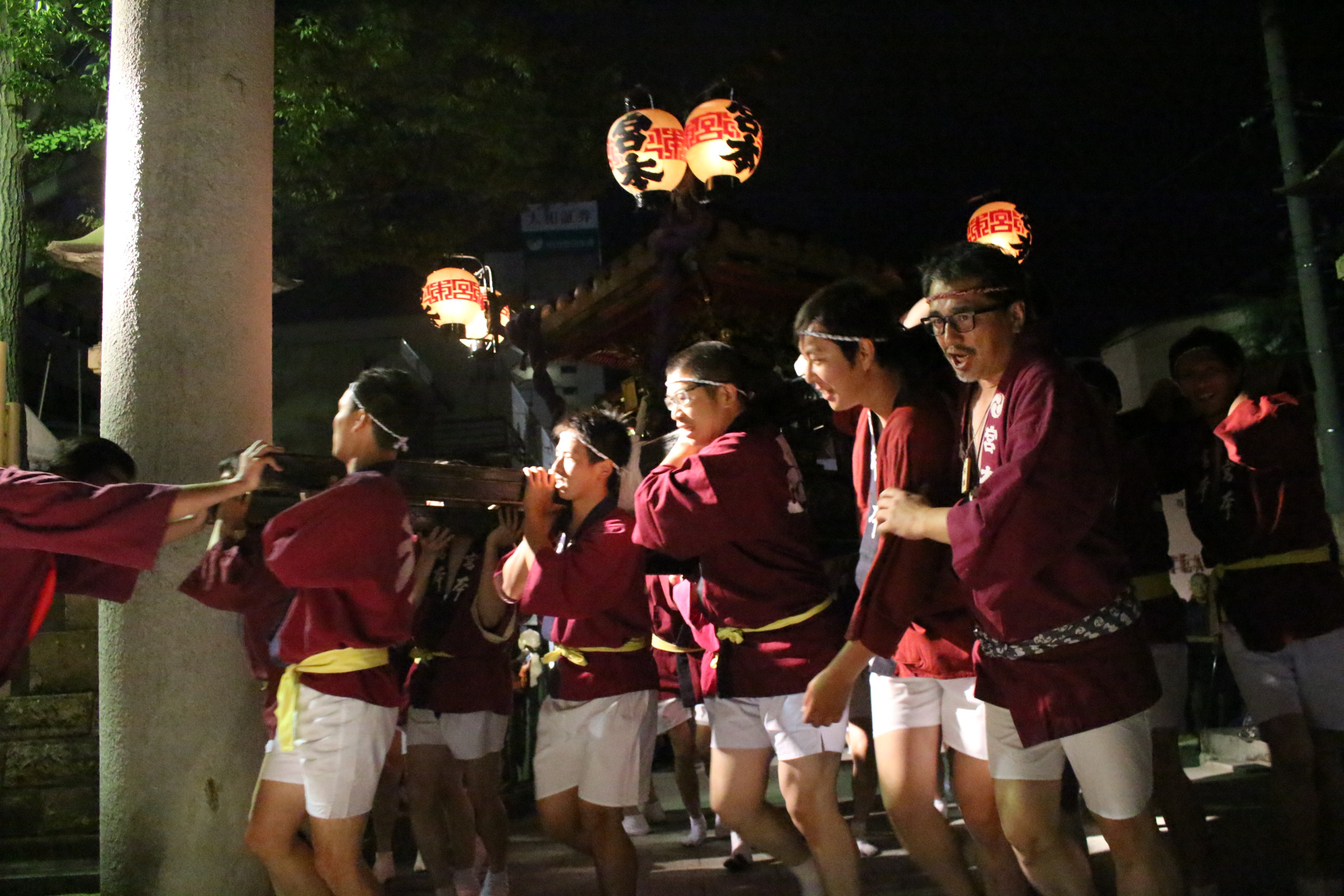
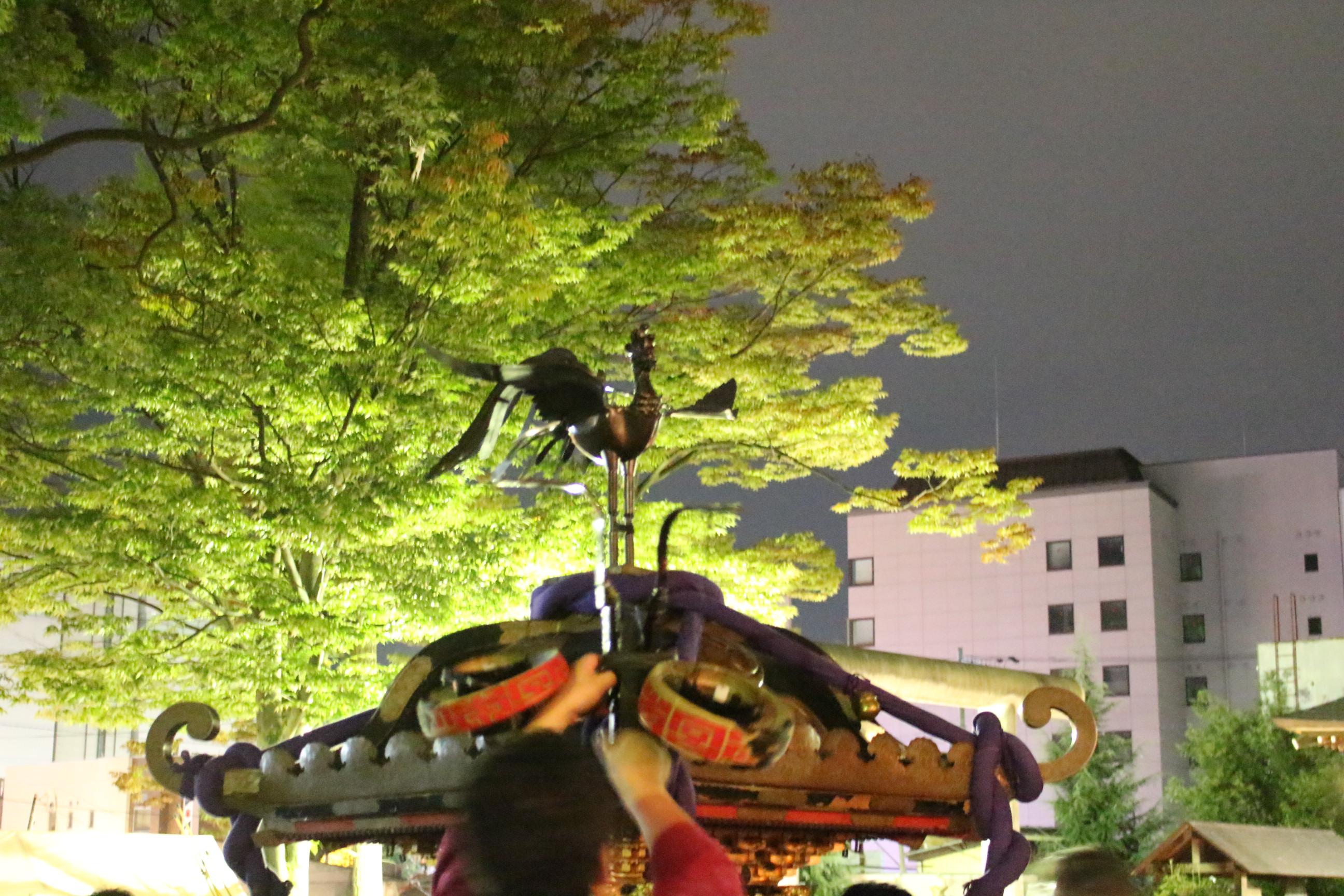
Photo gallery from 2017 Annual Autumn Festival of Asakakunitsuko-jinja (Mikoshi-Kangyo)


Sponsored Links