
Celebrating 60th anniversary of Godzilla! Message from GODZILLA
Godzilla and the Message of Eiji Tsuburaya
The year 2014 marked the 60th anniversary of Godzilla, and the Hollywood version of “Godzilla” made waves at box offices around the world.
Director Eiji Tsuburaya, known as the “Father of Tokusatsu” (special effects) and the creator of the Godzilla and Ultraman series, was born and raised in Sukagawa, Fukushima.
As reconstruction continues following the disaster of March 11, 2011, Godzilla carries messages that we, as residents of Fukushima, should remember and never forget. Once again, we look back at the powerful themes and messages Director Tsuburaya expressed through his monster films.

Sponsored Links
So what on earth is Godzilla?
When Godzilla was first released in 1954, nuclear weapons testing at Bikini Atoll had become a serious global issue. Against this backdrop, the original film was created as a “hydrogen bomb monster movie.” Promotional materials described Godzilla as a “spawn of nuclear power” and a “symbol of fear created by human beings.”
In the story, the monster is born after prehistoric creatures are exposed to radiation from nuclear weapons developed by humans. Godzilla then devastates human society—only to be destroyed by humanity once again.
The film powerfully portrays the arrogance and folly of humankind, as well as the terrifying force of nature unleashed by human actions.
Even today, the management of nuclear materials remains an important global issue—a “negative legacy” that future generations must continue to confront and study.
What is the energy of Godzilla?
Godzilla feeds on nuclear energy. In many versions of the story, the monster absorbs radiation and nuclear materials as its source of power.
Because of this, Godzilla is instinctively drawn to nuclear power plants and reactors, making them both a target and a symbol within the films.
Is Godzilla foe or friend for human being?
When the first film was released, Godzilla appeared as a “symbol of fear” and a “god of destruction.” The monster embodied the terror of nuclear power and the overwhelming force of nature.
Thunder rolling through dark clouds can resemble a lightning dragon, and the rumble of a storm echoes Godzilla’s roar. In this sense, Godzilla represents both the power and the threat of nature itself—an energy beyond human control.
Over time, however, Godzilla’s role has changed in different films, sometimes appearing not only as a destroyer, but also as a force that restores balance.
Find Tsuburaya’s Works Around the City
Sukagawa CityYou can find tributes to Eiji Tsuburaya’s works throughout the city. Attractions and monuments related to his creations are scattered around town, making it fun to explore. In addition, six post offices in Sukagawa offer special postmarks featuring Ultraman—a must-see for fans.
Fukushima CityFukushima City is home to the Yuji Koseki Memorial Hall, dedicated to the composer of “Mosura-no Uta” (The Song of Mothra). You can also find his monument standing in front of Fukushima Station.
Meet “Father of Tokusatsu” at Fukushima Airport!
In 1901, director Eiji Tsuburaya was born in Sukagawa, Fukushima. Known as the “Father of Tokusatsu” (special effects), he developed groundbreaking techniques unmatched anywhere in the world and created globally famous series such as Ultraman and Godzilla.
At Fukushima Airport, exhibitions related to Tsuburaya Productions are held throughout the year. The current exhibit highlights his personality and innovative special effects techniques. Fans won’t want to miss the surprising props and play equipment he invented, as well as rare scenes from movie studios.
Visitors can also enjoy interactive activities such as quizzes, a stamp rally, and hands-on experience corners. Don’t forget to take some photos to remember your visit!
Unsung heroes support City of Light
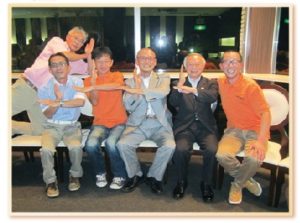
“Shwatch” — Keeping Tsuburaya’s Spirit Alive in Sukagawa
“Shwatch” is a volunteer group based in Sukagawa, the birthplace of director Eiji Tsuburaya. In cooperation with Tsuburaya Productions, the group has long organized events celebrating his works, including the popular “Ultra Family Gathering.”
From early on, the group has promoted the city through Tsuburaya’s characters, working to pass on the director’s achievements and creative spirit to future generations.
The “Godzilla City Initiative”
Around 1985, the Sukagawa Youth Association boldly launched the “Godzilla City Initiative.” With plans for the construction of Fukushima Airport newly approved, the city was becoming more tourism-minded. The association responded with a series of imaginative events.
They announced the “discovery” of Godzilla’s egg at Otsujigataki Falls, held a Godzilla Rock Concert, and even created a giant Godzilla silhouette on Higashiyama, a small mountain near Mt. Utsumine.
Many of the organizers were members of the Junior Chamber and belonged to the “Godzilla generation.” The enormous cultural impact of Godzilla was reflected in these bold and playful events.
The Birth of “Shwatch”
Their successors—who grew up not only with Godzilla but also in the age of Ultraman—deepened their cooperation with Tsuburaya Productions and founded “Shwatch.”
In 1999, they held the first Ultra Family Gathering, launching what would become an almost annual tradition. Their goal has always been clear:
“To give dreams to children through the power of Ultraman.”
They invite heroes and monsters to events so that Sukagawa can be known as the city where anyone can meet Ultraman.
In 2013, Sukagawa City even formed a sister-city affiliation with M78, the Land of Light, the fictional home of Ultraman. What began as volunteer activity has grown into a movement supported by the municipality itself.
Today, “Shwatch” has 22 members, mainly in their 40s and 50s. They continue working to pass on to children the imagination, technical creativity, and dream-driven spirit that Eiji Tsuburaya believed in.
Facing Reality, Creating Dreams
The original 1954 Godzilla was born out of fears of nuclear war and featured an extraordinary premise. Yet the members of “Shwatch” believe that these very elements made it a masterpiece—one that squarely confronted modern civilization.
The film was the result of the passion of many creators, and Eiji Tsuburaya transformed that passion into something timeless.
Through their activities, the members hope to show children that by facing reality honestly and looking at it from a broader perspective, they too can find the power to shape the future.
“The Song of Mothra” — Born in Fukushima
Yuji Koseki was born in Fukushima City in 1909. Over the course of his career, both before and after World War II, he composed more than 5,000 songs.
His works include:
-
“Koriyama Shimin-no Uta” (The Song of Koriyama Citizens)
-
“Eikan wa Kimi ni Kagayaku” (“The Crown of Victory Is Yours”), famous as the anthem of the National High School Baseball Championship
-
“Mosura-no Uta” (The Song of Mothra)
“The Song of Mothra” appeared in the fourth Godzilla film and became one of the most memorable songs in the series.
Many of Koseki’s compositions gained widespread popularity. The song you cheer to at a baseball game—or a melody you once heard on TV or radio—may very well be one of his works.
At the Yuji Koseki Memorial Hall, visitors can see handwritten scores and many of his treasured personal items, offering a closer look at the life and achievements of this remarkable composer.
Godzilla Craftworker in Fukushima
Like director Eiji Tsuburaya, prototype model creator Yuji Sakai was born in Sukagawa, Fukushima. This talented artist has brought Godzilla to life through his detailed and powerful models.
Godzilla makes up more than 90% of his work, and he has created over 150 Godzilla models to date. Today, he continues his creative activities in Fukushima Prefecture, carrying on the legacy of craftsmanship and imagination.

Sponsored Links