
The France wine company JPM Owner “Jean-Pascal Noirault” Interview
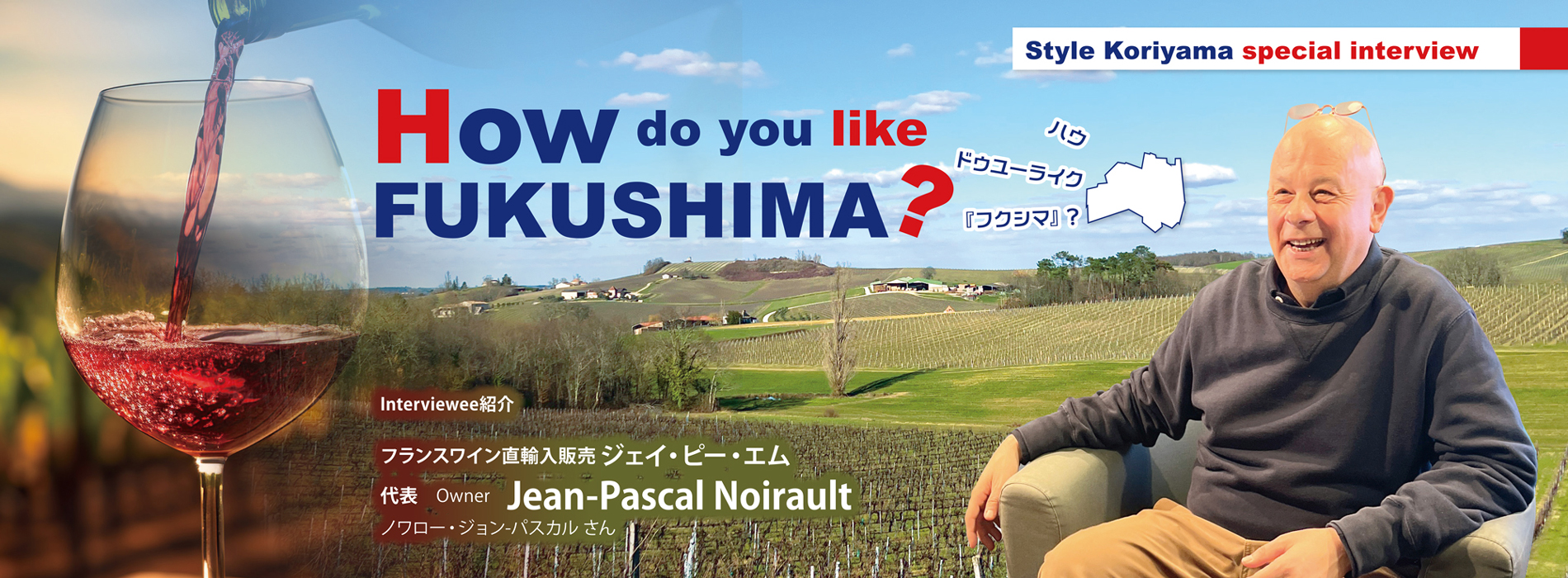
Style Koriyama special interview in English.
“How do you like FUKUSHIMA?”
We’re asking people from around the world about their experiences in Fukushima in this relay-style interview series.
This time, we spoke with Jean-Pascal Noirault, owner of J.P.M., a French wine direct import business based in Koriyama City, Fukushima Prefecture.
He shared what first brought him to Japan, his impressions of Japanese life and culture, and the story behind his business.
Where are you from?
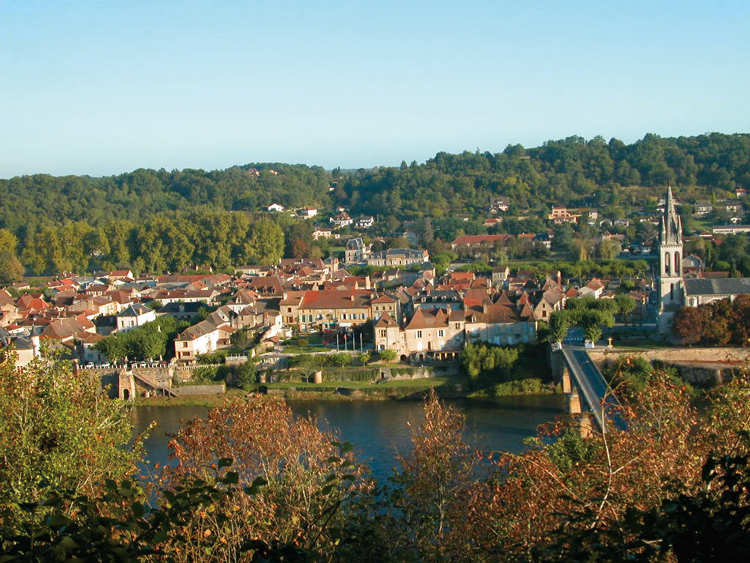
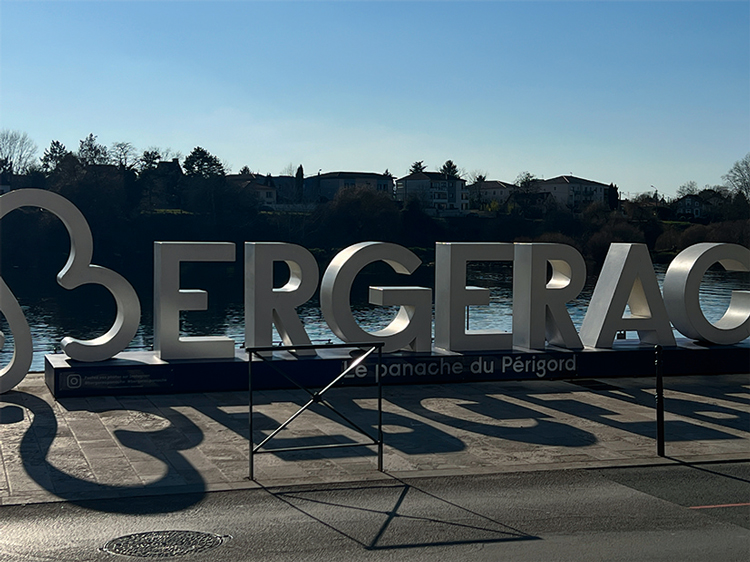
I’m from Bergerac, a small town near Bordeaux in the south of France.
More specifically, my hometown is Lalinde, a village located near Bergerac.
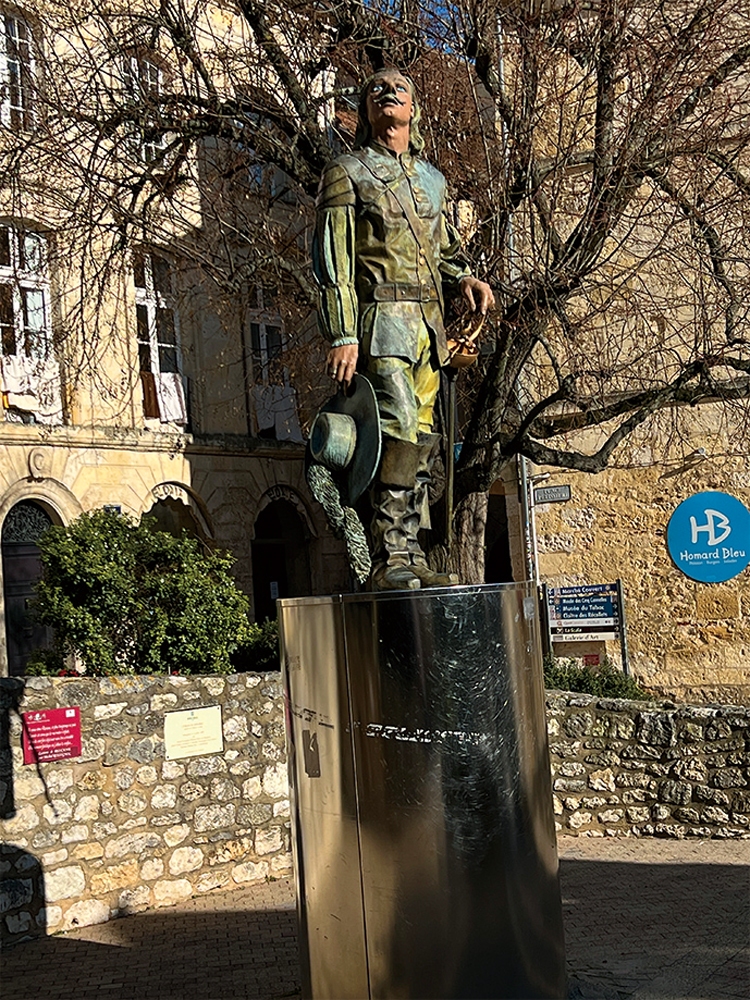
↓Savinien de Cyrano de Bergerac
What do you do in your free time?
I enjoy reading books, watching movies, taking morning walks, and studying wine.
I especially like thrillers, and I watch all kinds of movies.
How about the Japanese movies?
I like Tsuribaka Nisshi. It’s very easy to understand and enjoyable.
But actually, I can’t fish—and I don’t even like fishing!
Where is your favorite place in Fukushima?
Probably Sukagawa and Inawashiro.
Sukagawa has excellent food—especially the yakitori at Yakitori Yoshida and the Italian dishes and wine at FERRAGOSTO. They’re both outstanding.
On the other hand, Inawashiro is known for its beautiful scenery. The lakes and mountains are stunning, and it’s a peaceful, quiet place. Whenever I feel stressed from life or business, I go to Inawashiro to relax and recharge.
What is your favorite Japanese food?
I like yakitori, okonomiyaki, and oden. Those are my favorite foods in Japan.
How about your favorite French food?
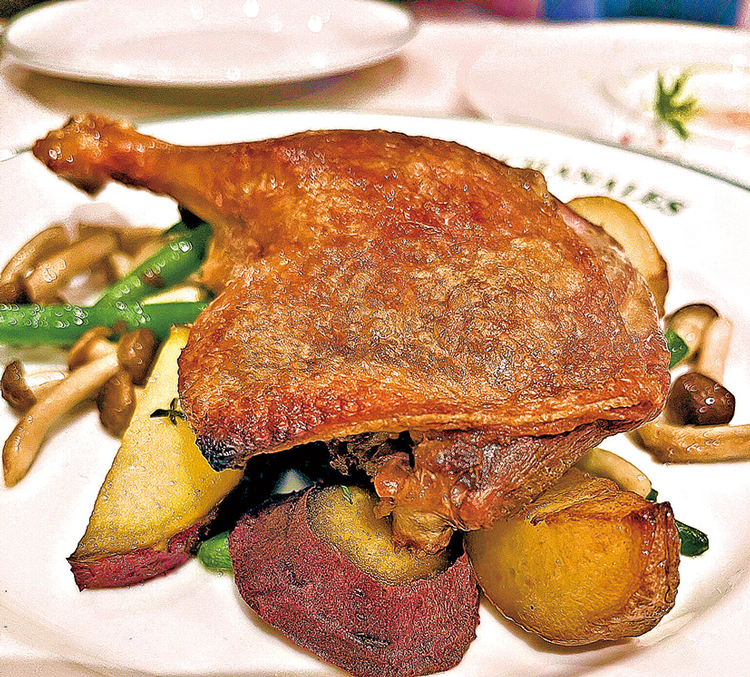
I like confit de canard and magret de canard.
Confit de canard is a traditional home-style dish from southwestern France. It is made by slowly cooking duck thigh in oil at a low temperature until the meat becomes tender and flavorful.
Magret de canard refers to duck breast from ducks raised for foie gras. It pairs wonderfully with red wine, and the more you chew, the richer the flavor becomes, spreading throughout your mouth.
What did you do for fun as a child?
I used to be a tennis player, so I often played tennis with my friends when I was about 15 years old. When I was younger, I also played soccer.
What brought you to Japan?
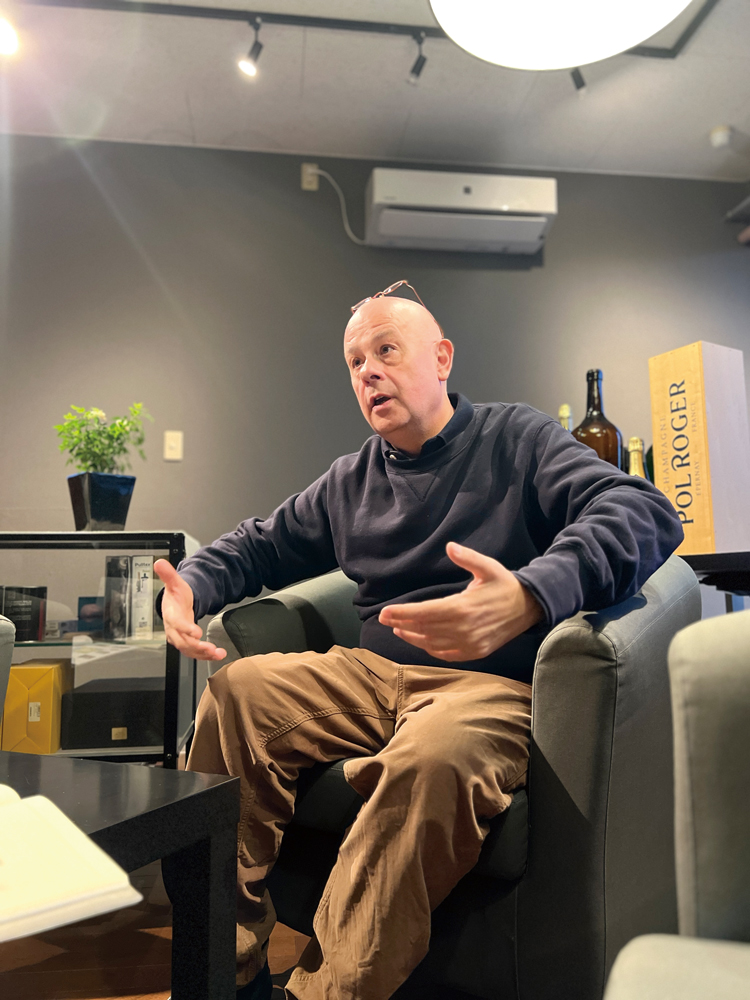
How did you and your wife meet?
We met through mutual friends.
At the time, I was working for an American company, and my Japanese importer didn’t speak much English—while my Japanese was terrible—so we needed a translator. My wife was doing translation work from French to Japanese, and that’s how we met.
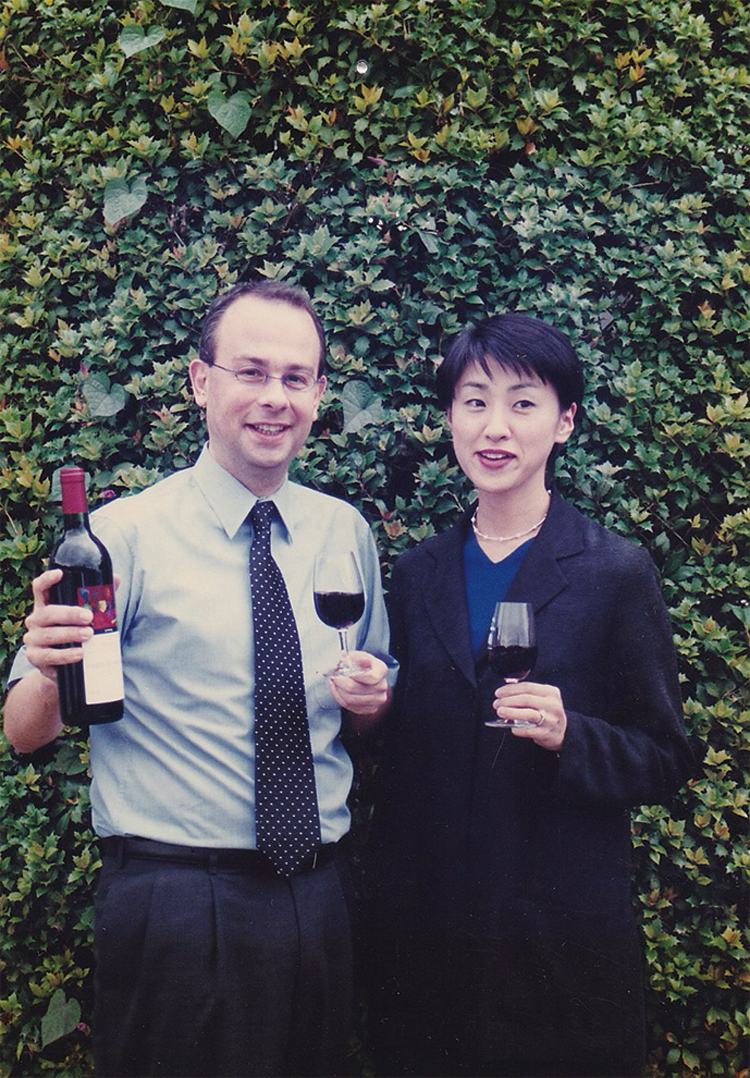
Why did you think to stay not in France but in Japan after you got married?
I wanted to start a new life and build my own company. I thought Japan was a great place to start a business—it felt like an exciting adventure and a meaningful challenge.
We first moved to Tokyo and spent five years there. Later, we decided to relocate to Fukushima, my wife’s hometown.
Was there any opposition from your parents in France to living in Japan?
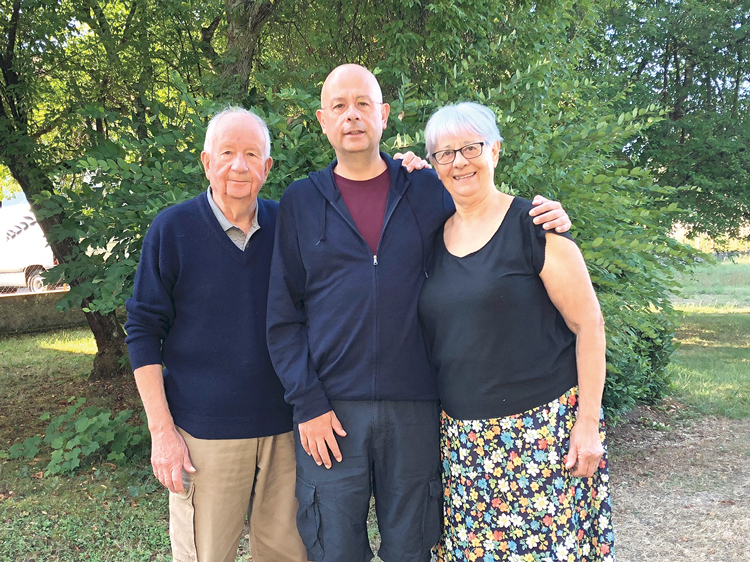
My parents told me that if I wanted to go to Japan, I should go—because it’s my life and my decision.
↓with his parents
When you came to Japan for the first time, did you feel some differences between France and Japan?
Everything was different—the people, the language, even the scenery. It felt like a whole new planet to me.
In particular, people in Japan are very busy, fast-paced, and hardworking. Things need to be done right away and very efficiently. In contrast, France is almost the opposite. People take their time—sometimes too much time—and the work philosophy is quite different. That was the biggest difference for me.
Have you ever had any trouble living in Japan?
When I first came to Japan, I couldn’t speak Japanese at all, so I had to study it every day. It took me five years to learn how to express myself properly, and during that time, it felt like I had a constant language barrier. That was the hardest part for me.
The second challenge was understanding the way people think. In France, we tend to speak directly and say what we think right away. In Japan, people are more reserved. Even if they have an opinion, they often don’t say it, so I had to learn how to read between the lines.
My Japanese is still not perfect, but now I can express most of what I want to say. I’m much more comfortable than I was 25 years ago. Talking with people turned out to be the most effective way to learn the language.
↓with his family
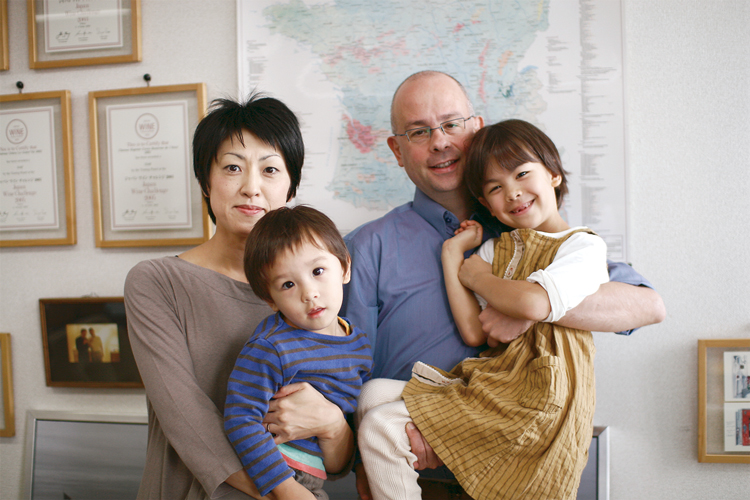
What made you start direct import sales of French wine?
I wanted to have my own business and be the owner of my company. When my wife and I started our business, we also wanted to offer something original—and wine was the most original product we could think of. Wine is very French; it’s an essential part of our culture.
To be truly original, we decided to import directly from small, lesser-known wineries. When I came to Japan 25 years ago, most Japanese consumers only knew Bordeaux and Burgundy. But France has so many other wine regions, and I thought it would be much more interesting to show the full picture. That’s why we started importing wines from small wineries outside Bordeaux and Burgundy, beginning with wines from my hometown.
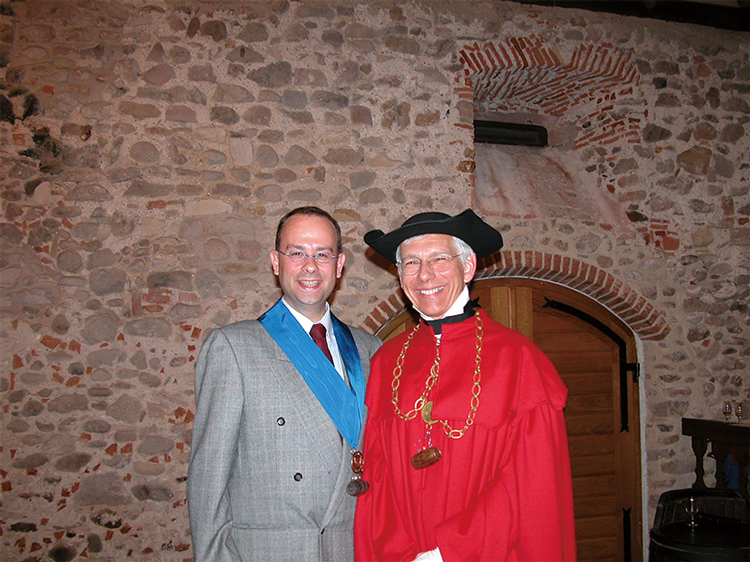
↓Photo taken with the Grand Master of Confrérie Saint-Etienne in 2023
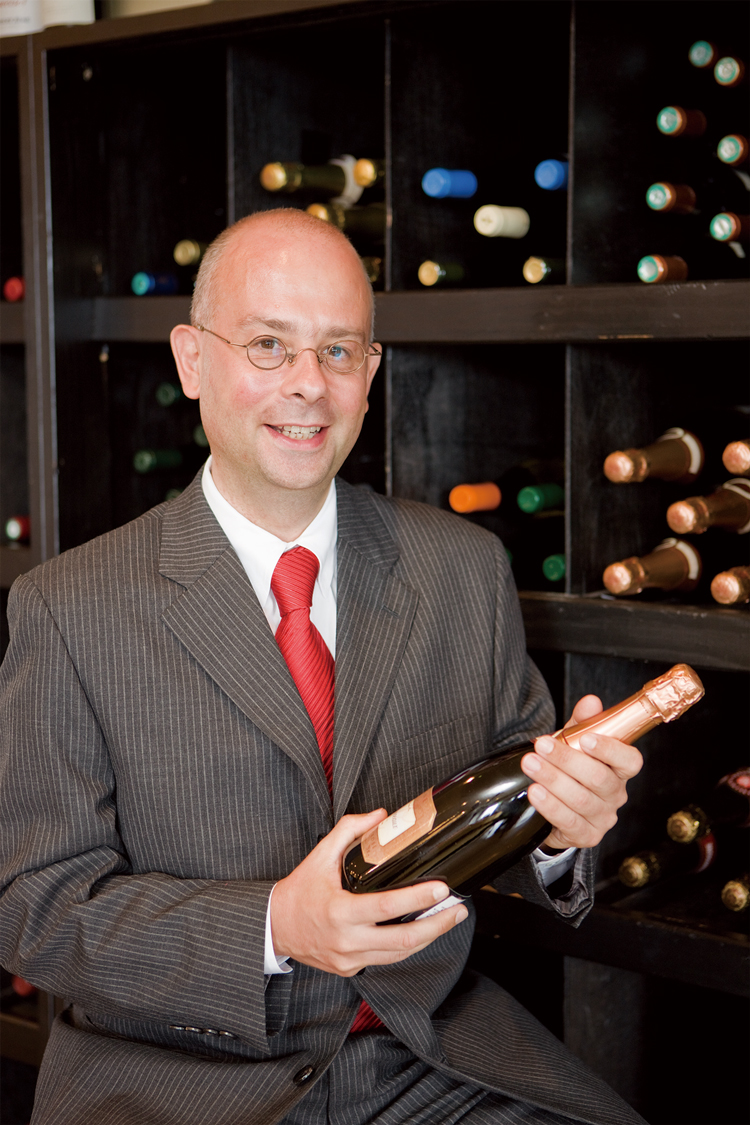
Have you had any problems with your business in Japan, and if so, how did you overcome them?
When you own a business, you face challenges every day. Let’s talk about selling—because the approach in Japan and France is very different.
In Japan, you have to be extremely careful and attentive. To make a sale, you need to take care of the customer constantly. Here, the customer is king, so I had to learn how to provide that level of service. I’m still learning, but it’s been a valuable experience.
In France, of course, you also take care of your customers, but not in the same way. You don’t have to pay that much attention every single day. In Japan, if you want to sell wine, you need to call and visit customers regularly. If they don’t place an order, you follow up again, visit again, and offer something new. The process in France is less rigorous—we don’t do it the same way.
How often do you go to France?
What would you like to do in the future?
I want to expand and grow my business. My goal is to import more wine from small, specialized wineries, and I may also explore importing wines from other countries like Australia or New Zealand. But for now, my focus remains on French wine.
How large is the sales area?
We mainly sell and ship wine wholesale in Japan. Most of our customers are professionals, such as restaurants, hotels, inns, and bars. However, non-professionals can also purchase directly through our website.
Finally, could you give the Style Koriyama readers a message?
Wine isn’t a difficult drink—it’s a social drink. It’s something you can enjoy with friends, and it pairs wonderfully with food. My motto is: you learn wine by drinking it, not by reading books first. Taste first, study later.
Wine becomes truly interesting when you try as many bottles as possible with friends and share your experiences. When you talk about wine, even people from different countries speak the same language—discussing aromas, structure, tannins, acidity.
When I do tastings with friends from around the world, we sit at the same table, open different bottles, and taste together. Suddenly, we feel like one group, united by our shared passion for wine. That’s what I want your readers to know: wine is not just a drink—it’s culture, connection, and discovery. The more you share, the more you want to learn.
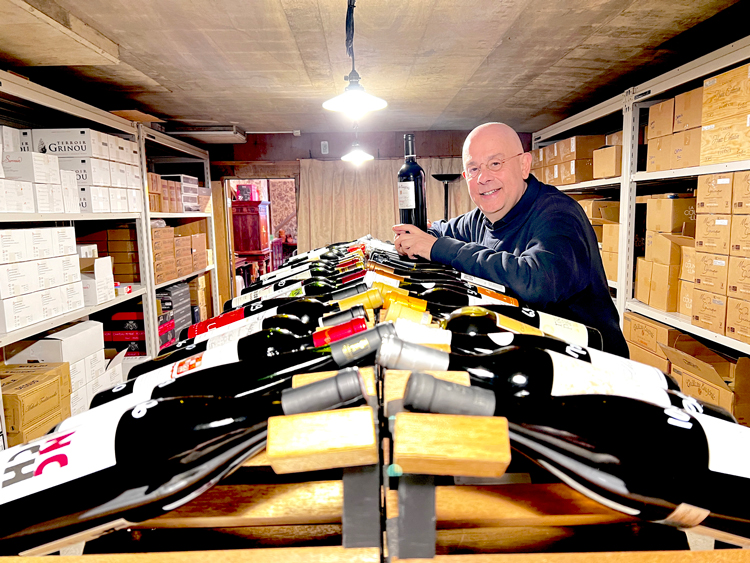
What is “WSET” ?
WSET stands for Wine & Spirit Education Trust. It is an educational institution based in London, UK, specializing in wine and spirits. WSET is a global organization that offers courses and exams in wine, spirits, and sake, and is recognized as one of the world’s leading providers of wine education for both professionals and enthusiasts.
Not only people working in alcohol distribution around the world, but also many industry professionals and general wine lovers take WSET’s international examinations.
Biography
JEAN-PASCAL NOIRAULT
BIRTHPLACE: POITIERS (79)
DATE OF BIRTH: 26 MAY 1969
HOMETOWN: BERGERAC (24)
GRADUATED FROM INSEEC BUSINESS SCHOOL – 4 YEARS
(MAJOR IN INTERNATIONAL TRADE AND MARKETING) (1993)
Qualifications and recent achievements
WSET DIPLOMA IN WINE & SPIRITS (2019)
WSG BURGUNDY MASTER LEVEL (2021)
PANEL JUDGE – JAPAN & SOUTH KOREA
JPM The Wine Company
French wine specialty store in Koriyama City, Fukushima Prefecture
Phone: 024-922-5957
Adress: 3-41 Yatsuyamadanishi, Koriyama City, Fukushima Prefecture