
An interview with Maari, a yoga instructor and entertainer from Koriyama in Fukushima Prefecture.
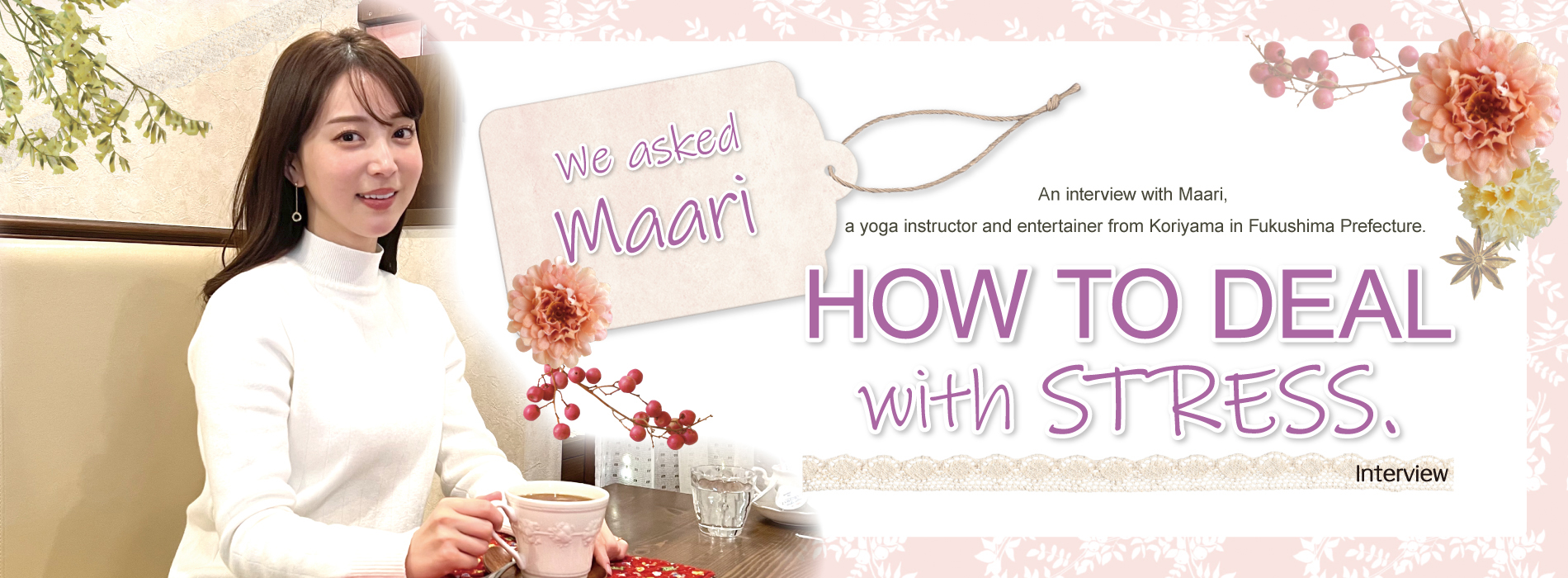
We asked Maari how to deal with stress.
Maari is a yoga instructor and entertainer born in Koriyama, Fukushima Prefecture. In addition to her work in wellness, she has appeared in numerous television dramas and commercials.
While training to become a yoga instructor, Maari discovered Nonviolent Communication (NVC). She says that putting what she learned into practice has helped her make her life more balanced and emotionally at ease.
As the prolonged impact of the coronavirus pandemic continues to create stress and uncertainty, we spoke with Maari under the theme, “Be kind to others and kind to yourself.”
In this interview, she shares practical ways to care for your mental well-being in daily life, simple yoga poses that anyone can easily incorporate, and her favorite healthy foods.
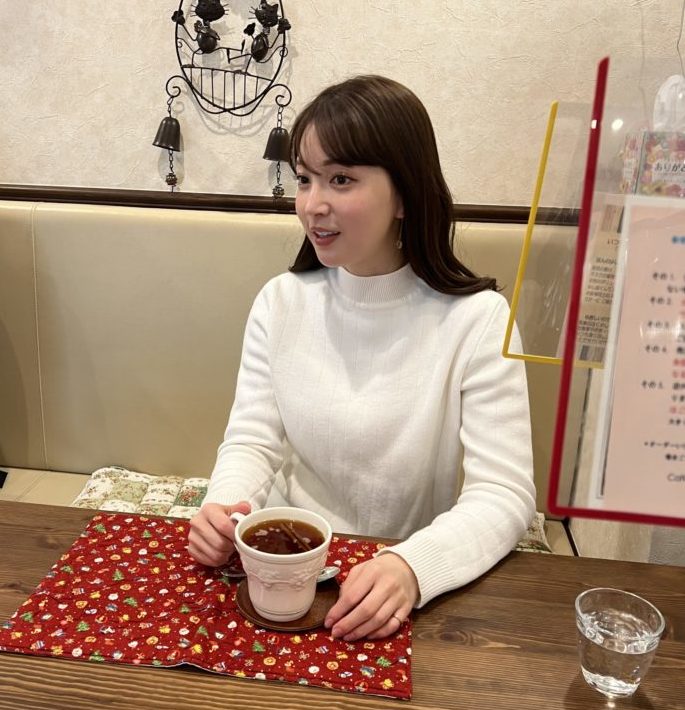
Q: What is the thinking behind NVC?
A:
I first learned about NVC as part of yoga philosophy while earning my yoga teaching certification. NVC stands for Nonviolent Communication.
In yoga, there is a core principle of non-violence. Violence does not refer only to physical harm in a fight, but also to harm expressed through words, attitudes, and behavior.
Through NVC workshops, you can learn practical skills to put the philosophy of “Be kind to others and kind to yourself” into everyday practice.
Q: In this stressed-out coronavirus society, there’s been a focus on mental health; do you have a good way of dealing with stress?
A:
When it comes to everyday emotions such as stress, anger, or grief, the key is to let yourself feel them — and then let them pass. Acknowledge the emotion when it arises, but don’t hold on to it.
It’s also important not to overreact to negativity from others. For example, if someone who takes things seriously is told, “You’re always like that, aren’t you?” they may internalize the comment and become even more negative.
Instead, if you can respond with something like, “Well, that’s one way to see it,” without becoming defensive or trying to deny it, you can prevent stress from building up inside you.
Learning to create that small space between what happens and how you respond can make everyday life much easier.
Q: Do you have any way of improving relationships with people you find difficult to get on with in the workplace or at school?
A:
Empathy is essential.
When someone you don’t particularly like says or does something, instead of reacting with irritation, try asking yourself, “Why? What might be the reason behind that?” Shifting your perspective in this way can help you stay calm.
The same applies when you hear a rumor or a story that may have been altered by someone else. Rather than accepting it at face value, take a moment to pause and organize your thoughts. Try to reconstruct the situation in your mind based on what you actually know.
By consciously practicing observation and empathy, you may find that the number of people you struggle with — or feel negatively toward — decreases surprisingly quickly.
Q: Could you tell us some yoga poses that we could use to freshen up when we have a short break at work or elsewhere?
A:
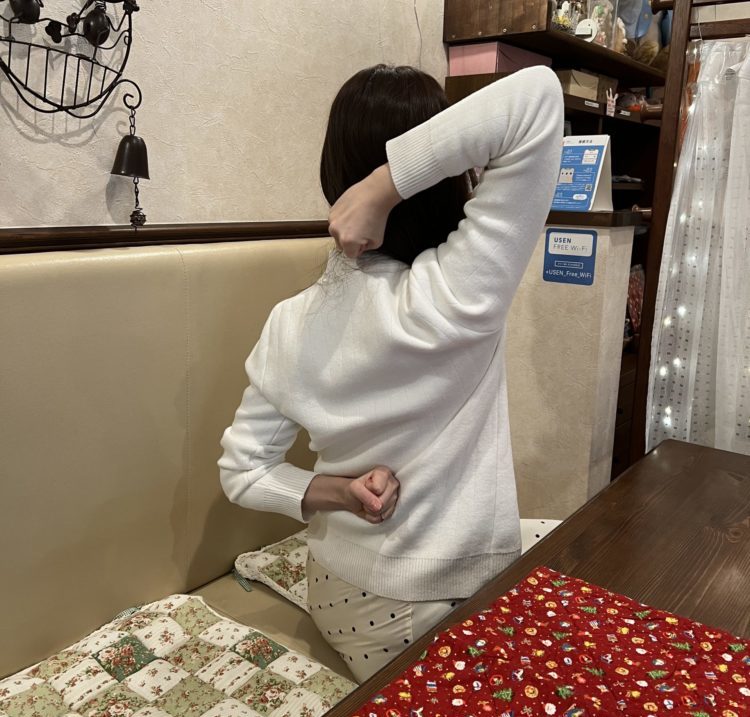
Two poses I recommend are Cow Face Pose and Eagle Pose. Both can be done while sitting, so they’re easy to incorporate into desk work or even while stopped in your car.
For Cow Face Pose, bring both arms behind your back and press your palms together between your shoulder blades. If your hands don’t reach, that’s perfectly fine — you can hold a towel or strap instead. This pose opens the shoulders and chest, helping to improve rounded posture and so-called “smartphone shoulders.”
For Eagle Pose (arms variation), cross your arms in front of your chest and bring your palms together in front of your face. The key point is to keep your shoulders relaxed and facing downward while lifting only your elbows. This pose helps relieve tension around the collarbone and shoulders.
Both poses are simple, but they can make a noticeable difference when practiced regularly.
The cow face pose
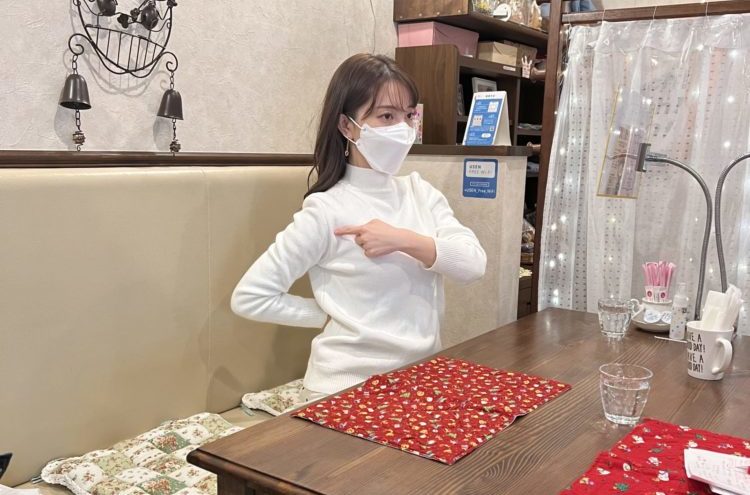
Rotate the shoulders slowly.
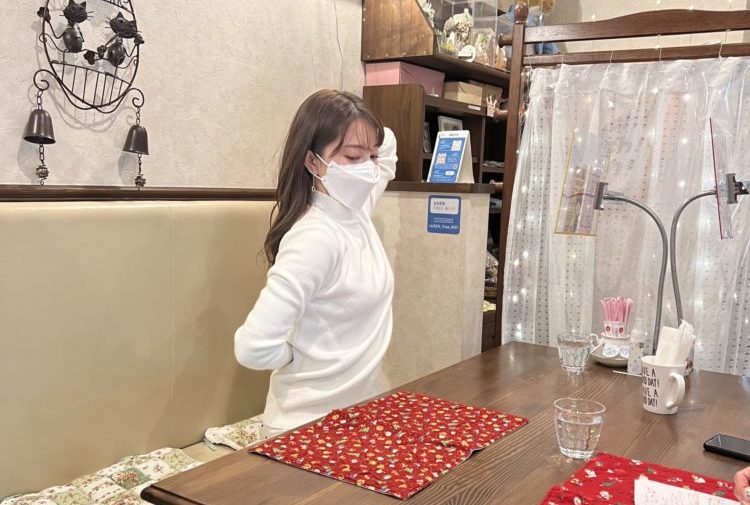
Grabbing a towel is OK
The eagle pose
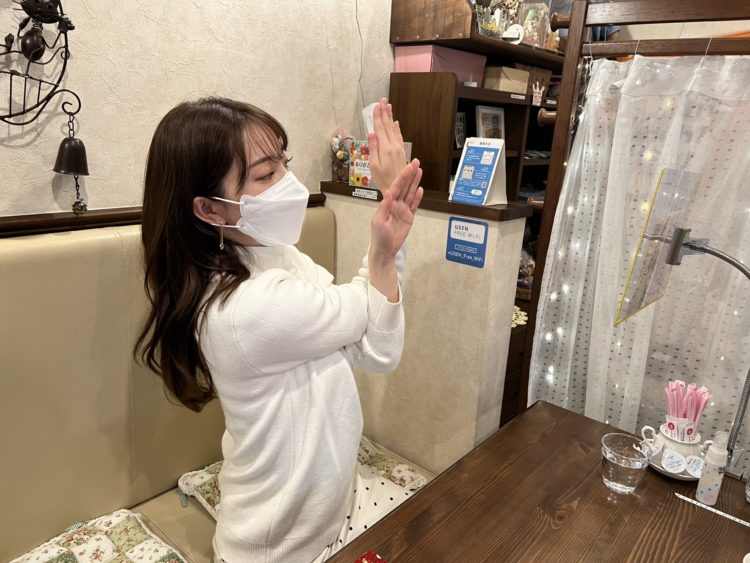
If it’s difficult, you can just use your fingertips
Q: Can you recommend any energy food that you often eat ?
A:
My favorite is the açaí smoothie I make for breakfast.
Since it’s a cold drink, I used to enjoy it only from spring through autumn. But it’s so delicious that now I have it even in winter — every single day.
I blend açaí purée, apple juice, soy milk, a whole banana, and a bit of chocolate in a juicer. It’s simple, nutritious, and very satisfying.
Eating a banana in the morning also helps support better sleep at night, as it contributes to the production of melatonin. When you combine that with yoga and moderate exercise during the day, you can sleep more soundly. Once your sleep cycle becomes steady, it’s easier to maintain a healthy routine overall.
For me, it’s a small daily habit that supports both physical and mental well-being.

Maari lives and works mostly in Tokyo, but visits her hometown of Koriyama twice a year, in summer and winter. For any reader who would like to know more about NVC or try yoga, Maari offers studio lessons, streamed studio lessons that you can take at home, online yoga services, and workshops for the NVC course. You can check for the latest information on the bookings site or by following the official Instagram account.
Maari’s Instagram account
https://www.instagram.com/maari.0108/
MAARI Yoga
https://reserva.be/maari0108