
Introduction to Yanagihashi Kabuki – the one and only kabuki in Koriyama City, Fukushima Prefecture
“Yanagihashi Kabuki” is held every year in Nakatamachi, Koriyama City, Fukushima Prefecture, on the day before Respect for the Aged Day.
Facility: Yanagihashi Kabuki Hall
Address: 51 Machimukai, Yanagihashi, Nakatamachi, Kōriyama City, Fukushima Prefecture, Japan
Sponsored Links
What is Kabuki?
Kabuki is a unique Japanese musical theater style that developed during the Edo period. The word “kabuki” comes from “kabuku,” meaning “to behave unusually” or “to stand out.” Kabuki is a comprehensive art form that combines dance, music, and dramatic plays (kamokugeki). Since 1629, it has traditionally been performed exclusively by men, with male actors who play female roles known as “Onna-gata.”
The History of Yanagihashi Kabuki
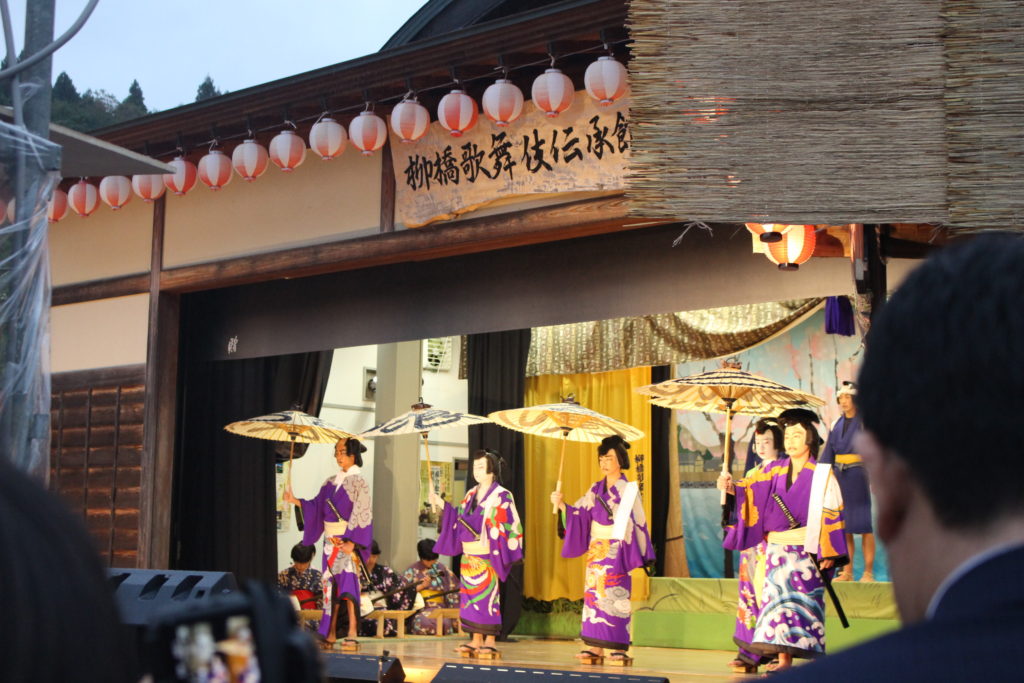
Yanagihashi Kabuki has been passed down from the Edo period in Yanagihashi, Nakatamachi, Koriyama City, Fukushima Prefecture — an area surrounded by mountains in the Abukuma Highlands.
According to tradition, traveling performers lived in this area during the Bunka and Bunsei eras of the Edo period, and they are believed to have passed on the kabuki tradition. The region was directly governed by the Tokugawa Shogunate and was relatively relaxed regarding the collection of nengu (annual taxes), allowing various forms of entertainment to flourish.
In 1820, Dainojo Nakamura dedicated a kabuki performance to the Sugafune deity, which is considered the official beginning of Yanagihashi Kabuki.
Although the tradition was repeatedly interrupted by wars and the shortage of gidayu (narrative) and shamisen players, Yanagihashi Kabuki has since been revived and continues to be performed today.
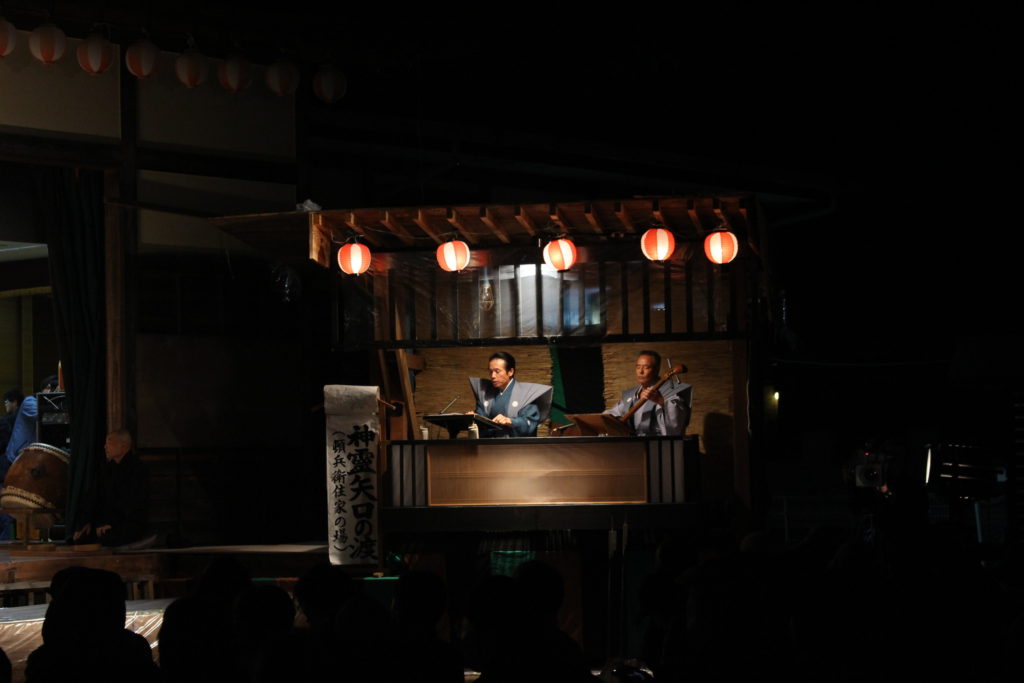
↑ Gidayu: traditional narrative singers, Shamisen: traditional three-stringed instrument players
The Yanagihashi Kabuki Preservation Society was established in 1980 and has held performances every year since. In 1983, Yanagihashi Kabuki was designated an Important Cultural Asset by Koriyama City, and it received the “Furusato Kirari Award” at the 21st National Hometown Event Grand Prix. Today, the members of the preservation society continue to pass the tradition on to local junior high school students.
One of the defining features of Yanagihashi Kabuki is that everything — from the sets to the scripts — is created entirely by local farmers. Like Edo-period kabuki, performances are carried out exclusively by men. Although there were periods of suspension due to a lack of successors from the Meiji period onward, the tradition has been revived and sustained since the formation of the preservation society.
The society also preserves costumes, wigs, and props dating from the late Edo to early Meiji periods. In 2003, 17 of these items were designated as Important Cultural Properties by Koriyama City.
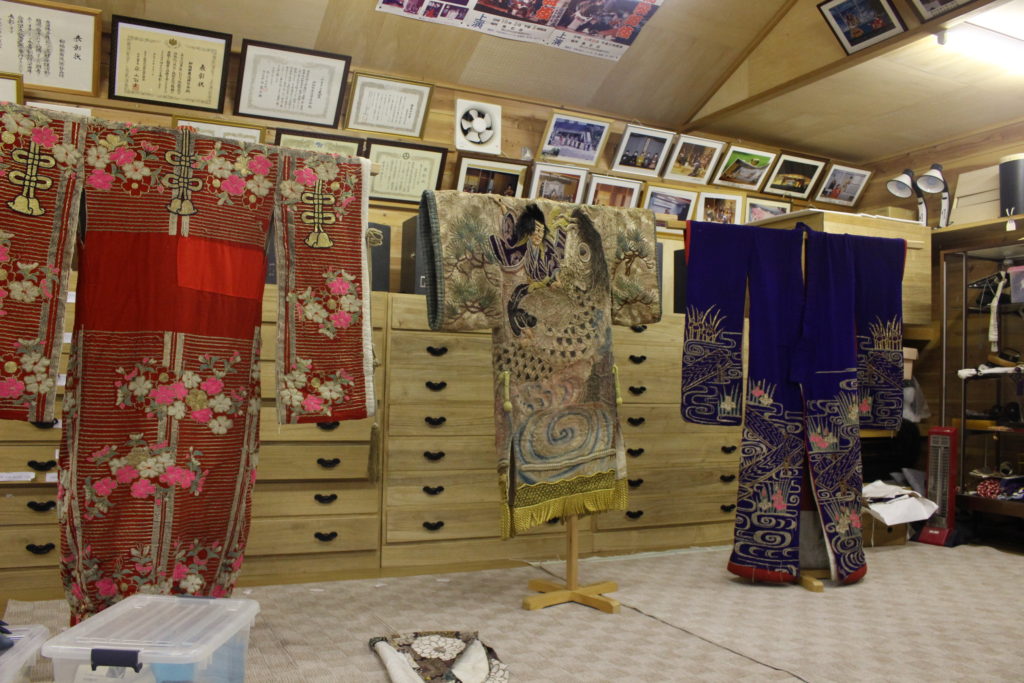
↑ Costume used during the Edo period
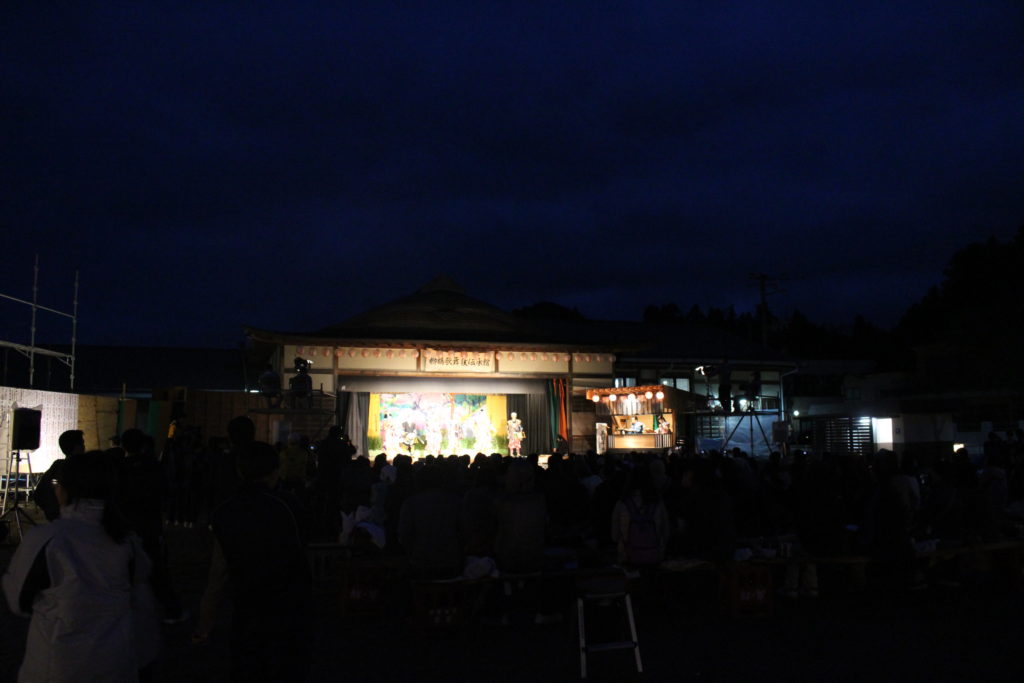
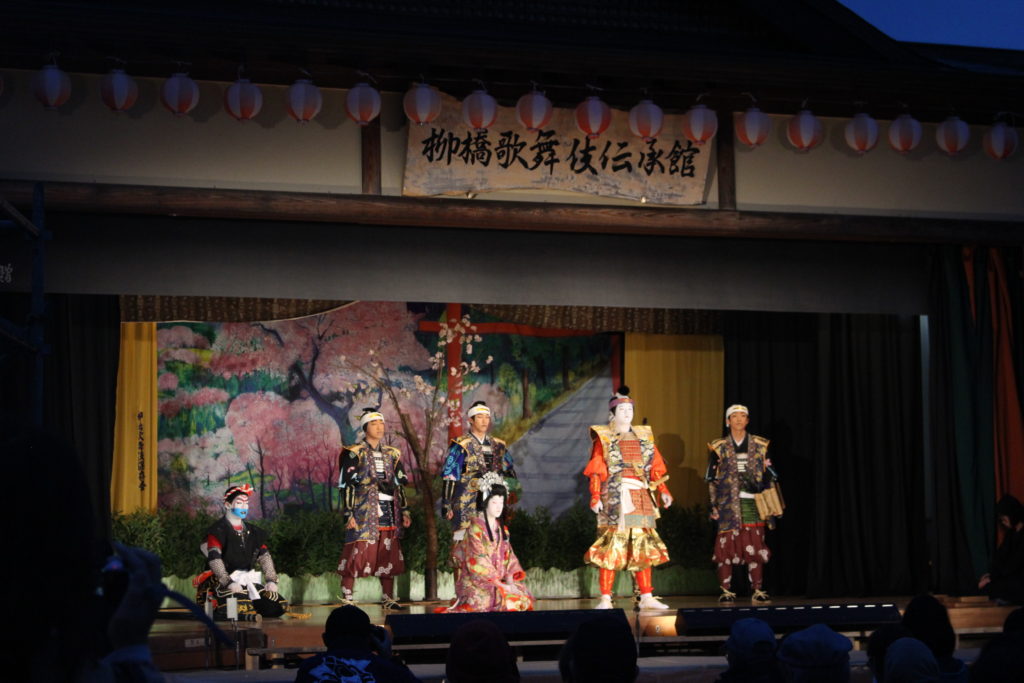
↑ The stage looks especially beautiful at dusk
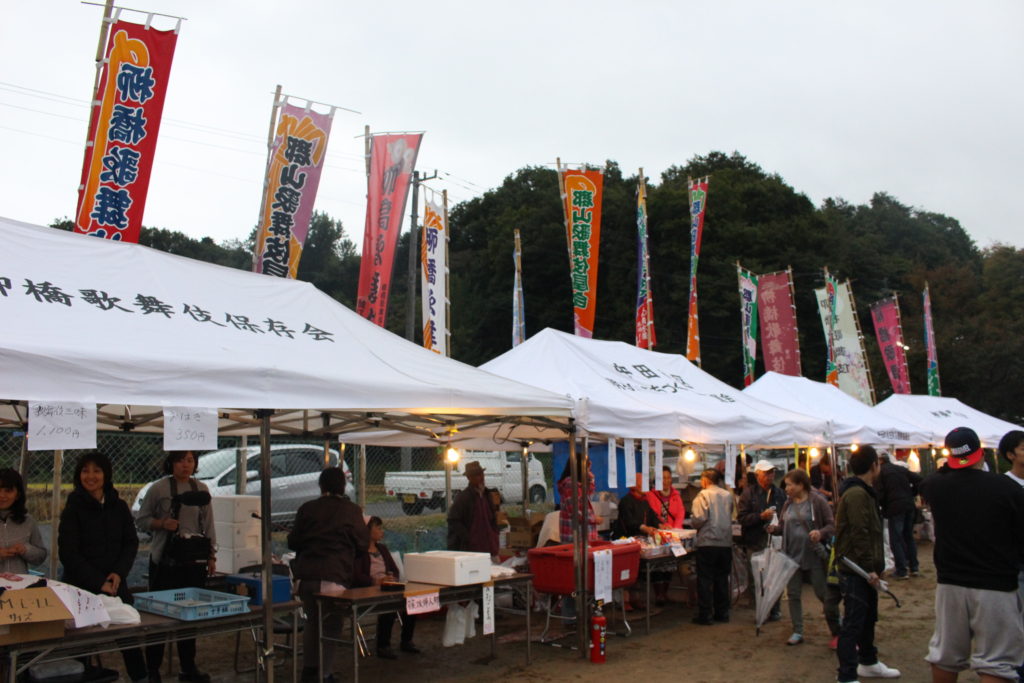
↑ Stalls at the venue offer activities like goldfish scooping. Both children and adults can enjoy the festival for this one special night.
History: From the Origins of Yanagihashi Kabuki to the Formation of the Yanagihashi Kabuki Preservation Society
1804–1830 (Bunka and Bunsei Period)
Folk culture from Edo flourished across Japan.
1810
Dainojo Nakamura dedicated a kabuki performance to the Sugafune deity. A special inscription on the chest used for this dedication is still preserved by the society.
1840
Records show that Yoshitsune Senbonzakura (a famous puppet theater masterpiece) was performed in Yanagihashi and Konomezawa villages. The cosmetic tools used at that time have been preserved to this day.
1883
Nogoro Nakamura (Munakata Tokuemon), Mine Neotayu Takemoto (Inayoshi Furukawa), and others became proprietors, organizing both dedication kabuki and entertainment kabuki performances.
1925
A major fire in Yanagihashi village in June destroyed many kabuki-related books and materials.
1940
Kabuki performances were interrupted due to World War II.
1947
After the war, kabuki was revived as Youth Kabuki, with performances dedicated to the Sugafune Shrine during the Autumn Festival.
1980
The Yanagihashi Kabuki Preservation Society was established.
Main Plays Performed by Yanagihashi Kabuki
Kabuki
Main Plays Performed by Yanagihashi Kabuki
-
Ichinotani Futabagunki – Sumanoura Uchi no Ba
-
Ichinotani Futabagunki – Uharasato no Ba
-
Ichinotani Futabagunki – Kumagayajinya no Ba
-
Shinrei Yaguchi no Watashi – Tonbei Sumika no Ba
-
Oushu Adachigahara – Sodehagi Saimon no Ba
-
Oushu Adachigahara – Bunji Sumika no Ba
-
Ehon Taikoki – Judanme Amagasaki Kankyo no Ba
-
Meiboku Sendaihagi – Taiketsu Ninjo no Ba
-
Yoshitsune Senbonzakura – Fushimi Inari Torii-mae no Ba
-
Sugawara Denju Tenarai Kagami – Terakoya no Ba
-
Kamakura Sandai-ki – Kinugawamura Kankyo no Ba
-
Aoto Zoshi Hana-no Nishikie – Shiranami Gonin Otoko Inasegawa Seizoroi no Ba
-
Yoshitsune Koshigone-jo – Gotobe
-
Kanadehon Chushingura – Tetsudama Watashi Futatsuno Tama
-
Kanadehon Chushingura – Genta Kando no Ba
-
Kanadehon Chushingura – Hangan Seppuku no Ba
-
Tsubosaka Reigenki – Osato Sawaichi
We asked Mr. Yoshinori Furukawa (former president of the Preservation Society, left) and Mr. Tsuyoshi Munetaka (current vice president and actor, right) about Yanagihashi Kabuki
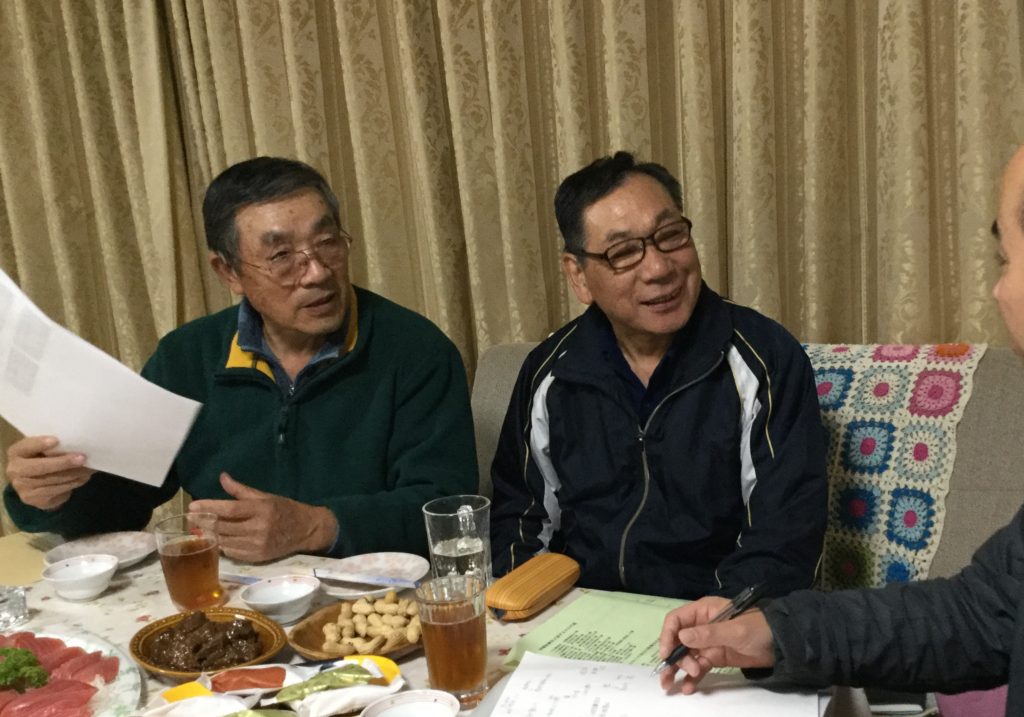
◆How many plays are there, and how long does it take to practice?
There are a total of 17 plays, and each year, three of them are performed. Yoshitsune Senbonzakura (Yoshitsune and the Thousand Cherry Trees) has been performed annually by junior high school students for the past 20 years. Learning kabuki is challenging, and it typically takes about a year to master a single play.
◆What are the most challenging aspects of performing Kabuki?
Actors must perform in sync with the gidayu (narrative singers who act like conductors) and the shamisen players. Many others are also involved, including kuroko (stagehands dressed in black) and the teams responsible for sets, lighting, music, costumes, and makeup. The success of a performance depends on everyone doing their part flawlessly.
◆What are your future goals?
Through Yanagihashi Kabuki, we hope to bring people together. With many residents moving to the city, we also aim to help revitalize the local community through kabuki performances.
Comment from Interview Staff After Watching Yanagihashi Kabuki
It was my first time seeing kabuki, and I was worried I might not understand the play because of the actors’ unique traditional speaking style. Surprisingly, it was easy to follow! Reading the play’s overview beforehand really helps, making the performance even more enjoyable.
About the “Kabuki Class” at Koriyama City Mitate Junior High School
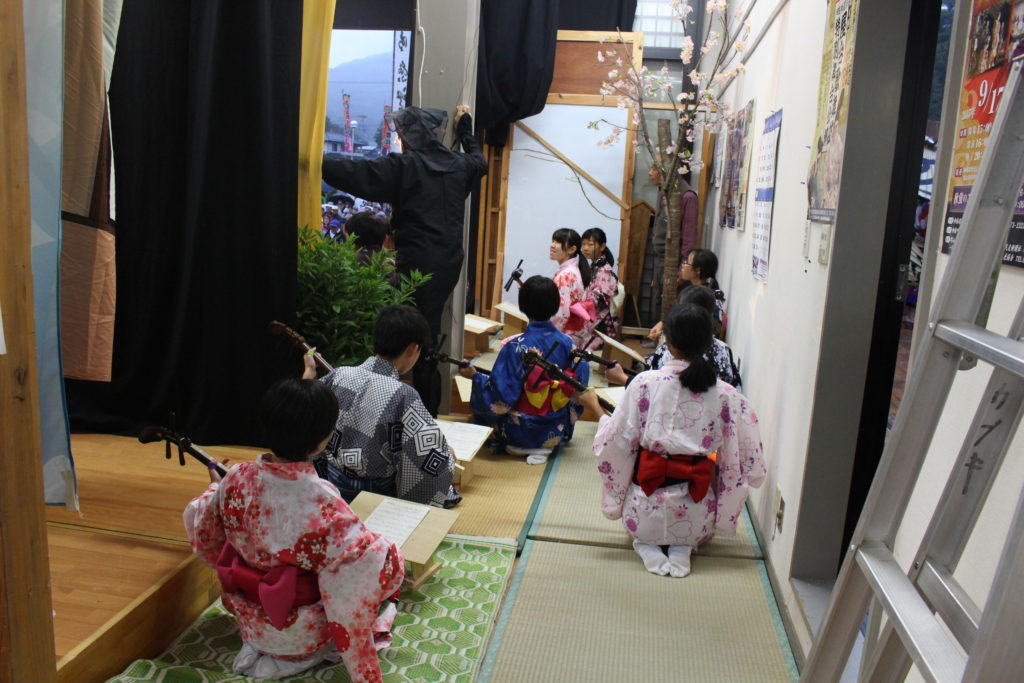
About the Kabuki Class at Koriyama City Mitate Junior High School
According to records from the Yanagihashi Kabuki Preservation Society, junior high school students first performed a kabuki play with Ichinotani Futabagunki – Sumanoura Uchi no Ba in 1995 during the Asakakunitsuko Shrine Autumn Festival Kabuki Revival Event.
In 1997, Kotobukishiki Sanbasou Ichinotani Futabagunki – Sumanoura Uchi no Ba was performed at the renovated school gymnasium as part of the school’s 50th Anniversary Ceremony. The following year, in 1998, Ehon Taikoki – Judanme Amagasaki Kankyo no Ba was presented again at the Asakakunitsuko Shrine Autumn Festival Revival Event.
The school officially introduced the Kabuki Class as part of integrated studies in 2006 to help pass on this proud traditional performing art. Initially offered as an elective, the class became open to all students in 2005, who choose to learn in areas such as acting, stage management, music, accompanying orchestra, or makeup.
Students perform annually in the Regularly Scheduled Yanagihashi Kabuki Performance, as well as in the Kabuki Class Presentation during the school’s Mitate Festival.
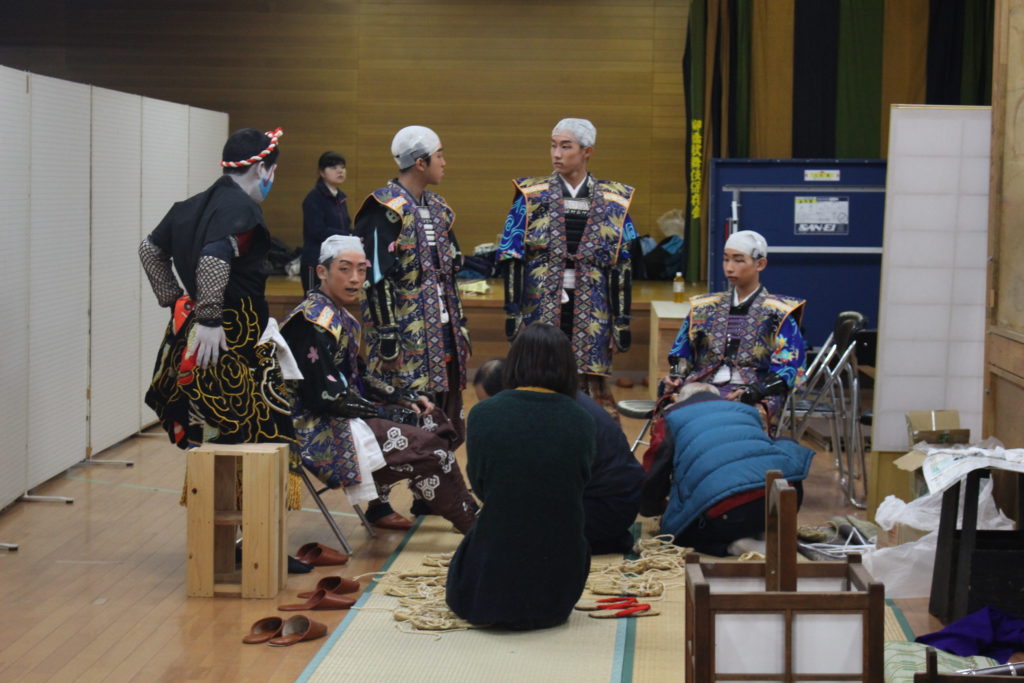
↑The back stage: before to the presentation
Sponsored Links